Tuscany | ITALY

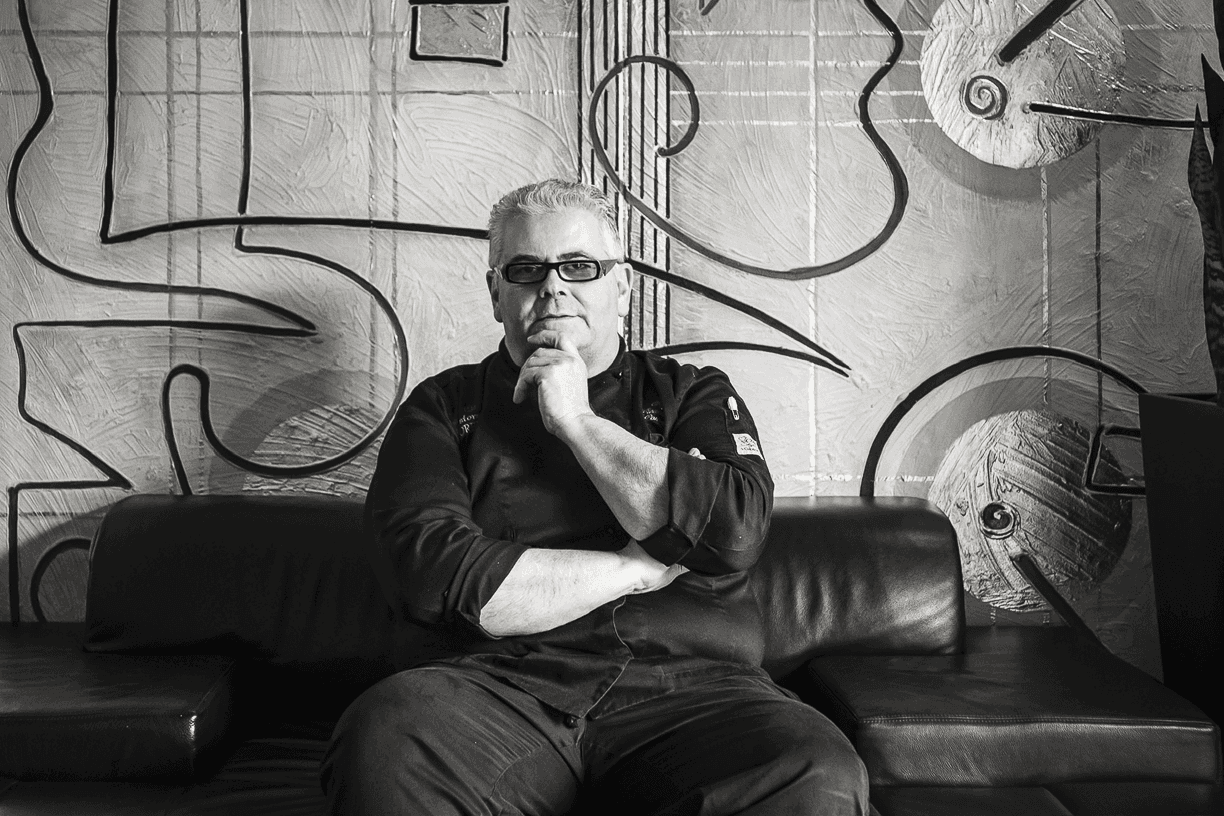
BEHIND THE PLATE | Chef Gioacchino Pontrelli

From Scafati to Forte dei Marmi, from the traditions and tastes of Campania to the Tuscan realm of which it has been a part and guide for 40 years. Pontrelli is the main protagonist of the new Retrogusti series that each month features a chef, their philosophy, their world, and their cuisine.

Tuscany | ITALY

BEHIND THE PLATE | Chef Gioacchino Pontrelli

From Scafati to Forte dei Marmi, from the traditions and tastes of Campania to the Tuscan realm of which it has been a part and guide for 40 years. Pontrelli is the main protagonist of the new Retrogusti series that each month features a chef, their philosophy, their world, and their cuisine.

Identikit Retrogusti

Name: Gioacchino Pontrelli
Year of Birth: 1965
Origin: Scafati (Salerno)
Where he cooks today: Ristorante Lorenzo

For over forty years, he has been at the helm of the kitchen at the Lorenzo restaurant in Forte dei Marmi, where he holds the position of executive chef. His first professional experiences began in Campania, in some restaurants near his hometown, Scafati. He then continued his journey in Capri, followed by Rome, then Florence, and Viareggio. Finally, he arrived in Forte dei Marmi, where he began a long and significant collaboration with Mr. Lorenzo Viani.

His world

Ingredient that represents it

The ingredients that represent it come from its roots and its journey.

His homeland is Campania: a generous, sunny land, filled with intense aromas, products that speak of the sea and the countryside, and traditions that run in the blood. It is there that his first connection with food is born, the most instinctive one, which shapes and accompanies him throughout his life.

Tuscany has then become his second home, a place that has given him another gastronomic soul, different yet perfectly complementary. Here he discovered a straightforward, sincere cuisine made of real products, clear flavors, and an elegant rusticity that captivates. Being transplanted in Tuscany has profoundly enriched his way of cooking and feeling the territory.

Today Versilia lives on, a place where richness is everywhere: in the sea that offers something new every day, in the land that gifts extraordinary products, in the hills that are fragrant with the seasons. Here, even a simple ingredient like the Capezzano potato becomes a symbol of identity, a product that speaks of work, tradition, and quality. And then the catch, immense and surprising, which changes continually and invites one to be curious, attentive, and creative.

His cuisine is this: a intertwining of origins and destinations, of memory and discovery. It is Campania that has shaped him, Tuscany that has adopted him, and Versilia that inspires him every day. It is a journey that starts from the land and reaches the sea, and it never ceases to amaze him.

Ingredient that prevents

It does not exclude any ingredient: every ingredient can have a role, as long as it makes sense in the dish.

The dish that makes him feel like a child again

A dish that brings him back to childhood is artichokes. He has always adored them, and his grandmother would prepare them on the grill, as is customary in Naples: whole, seasoned with garlic, parsley, pepper, and extra virgin olive oil. They were placed directly on the charcoal grill and left to cook slowly until they were perfect.

Once ready, they were lifted and peeled, removing the burnt outer part. That aroma, that simple and ancient flavor, is something that is still loved today.

A teacher

A true master of life, and the person from whom he drew his first inspirations, is his mother. She was extraordinarily skilled in the kitchen, especially with desserts, and it was by watching her and tasting her creations that his love for this profession was born.

The context

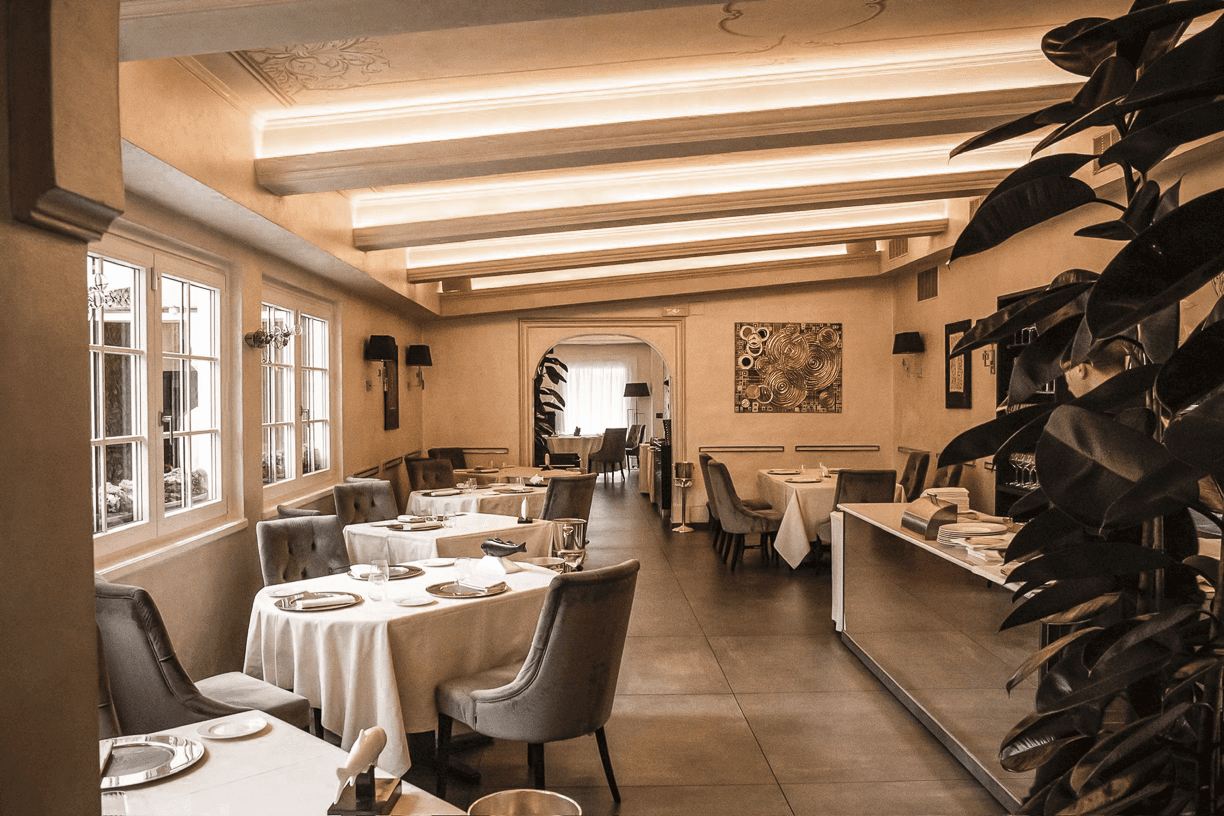
Restaurant: Restaurant Lorenzo, Forte dei Marmi
Via G. Carducci, 61, 55042 Forte dei Marmi (LU)
Phone: 0584 874030
Covers: 55

Brigade:
Sous chef: Chef Alessio Bertuccelli and Lorenzo Pistoia
Sommelier: Matteo Tognetti and Lorenzo Giannini

Philosophy

Lorenzo's culinary philosophy is based on a simple yet profound principle: to tell the story of the land. Every dish is born from the enhancement of the products of the land and the sea, enriched by essential raw materials such as veal, duck, lamb, and many other carefully selected excellences. Without the work of the producers, nothing would truly make sense on the plate.

There is a great deal of research behind every choice: it takes just a few ingredients to create something delicious, provided they are combined with intelligence, respect, and sensitivity.

The 5 Retrogusti questions

What is the aftertaste of your cuisine?

The aftertaste of my cooking is bold, flavorful, and full of character: a mark that comes directly from my Campanian origins.

What is not seen on the plate but weighs a lot?

The entire supply chain: producers, farmers, fishermen, researchers.

The invisible work, made up of study, selection, trials, and care. It is this hidden effort that allows for serving a high-quality dish, conceived and executed with precision.

An error that made you grow?

Accepting the challenge of Restaurant Lorenzo when I was very young. Looking back today, I might not have been ready, but he believed in me, and that pushed me to take the plunge.

I wasn't sleeping at night, spending my days in the kitchen trying, experimenting, and remaking dishes a thousand times. What I then saw as an enormous risk, today I recognize as one of the choices that helped me grow the most.

He gave me discipline, vision, and confidence. And thanks to that challenge, I have achieved goals I never would have imagined.
A culinary tradition that tells your territory better than a thousand words?

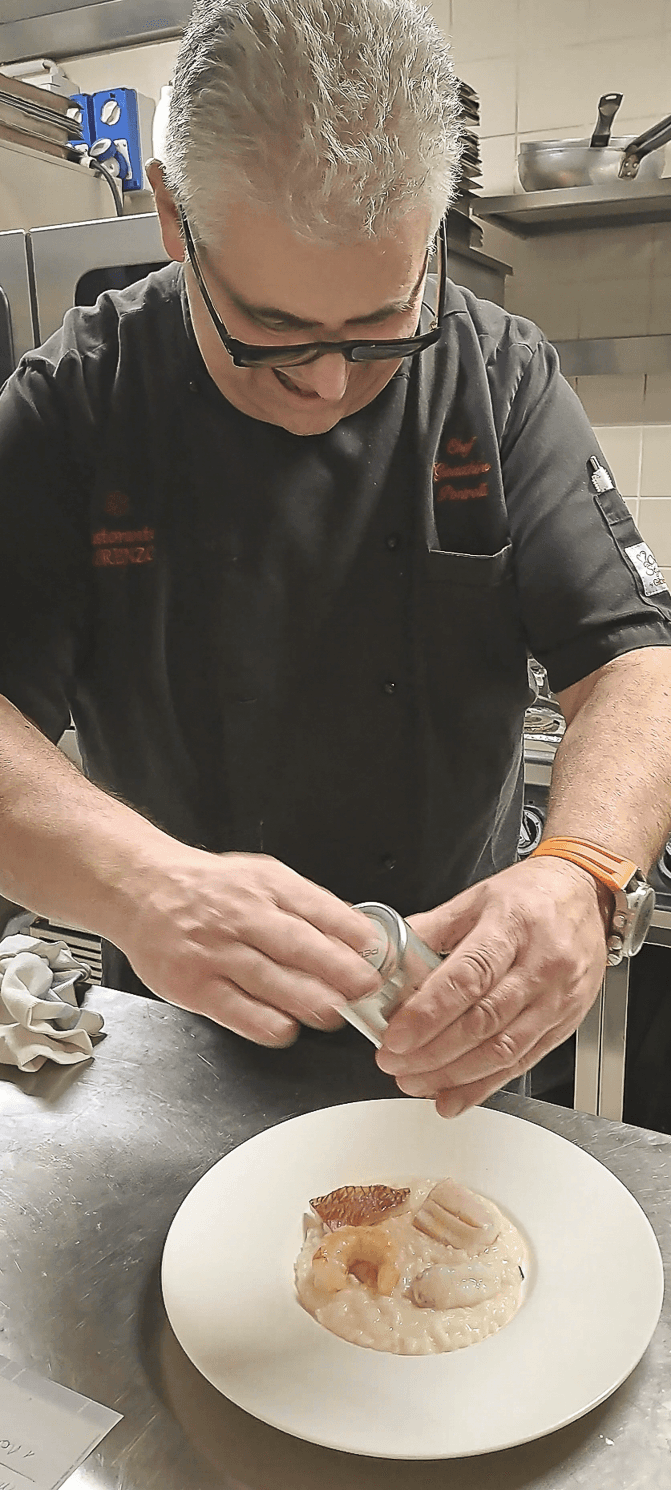
One of our truest traditions is fish bavette, a pasta that we cook directly in the pan, as was done in the past.

It starts with a simple base of garlic, oil, and chili pepper. Then a liquid is added, either a fish broth or just water, which allows the pasta to cook slowly, absorbing flavors and aromas.

At that point, shellfish and mollusks come into play, telling the story of our sea and bringing it to the plate.

The final creaming binds everything together and creates an explosion of flavor, intensity, and purity.

This dish represents me: it is my cuisine. Simple in its roots, technical in gesture, deep in flavors.

How do you see your kitchen in the future?

In the future, I see a kitchen that is increasingly attentive to the raw materials, to respecting what nature offers us and those who produce it.

I see the importance of truly listening to the guests, understanding what they are looking for, what excites them, and what makes them feel good at the table.

For me, the future is to make people happy through carefully selected ingredients and a welcome that comes from the heart.

The symbol dish

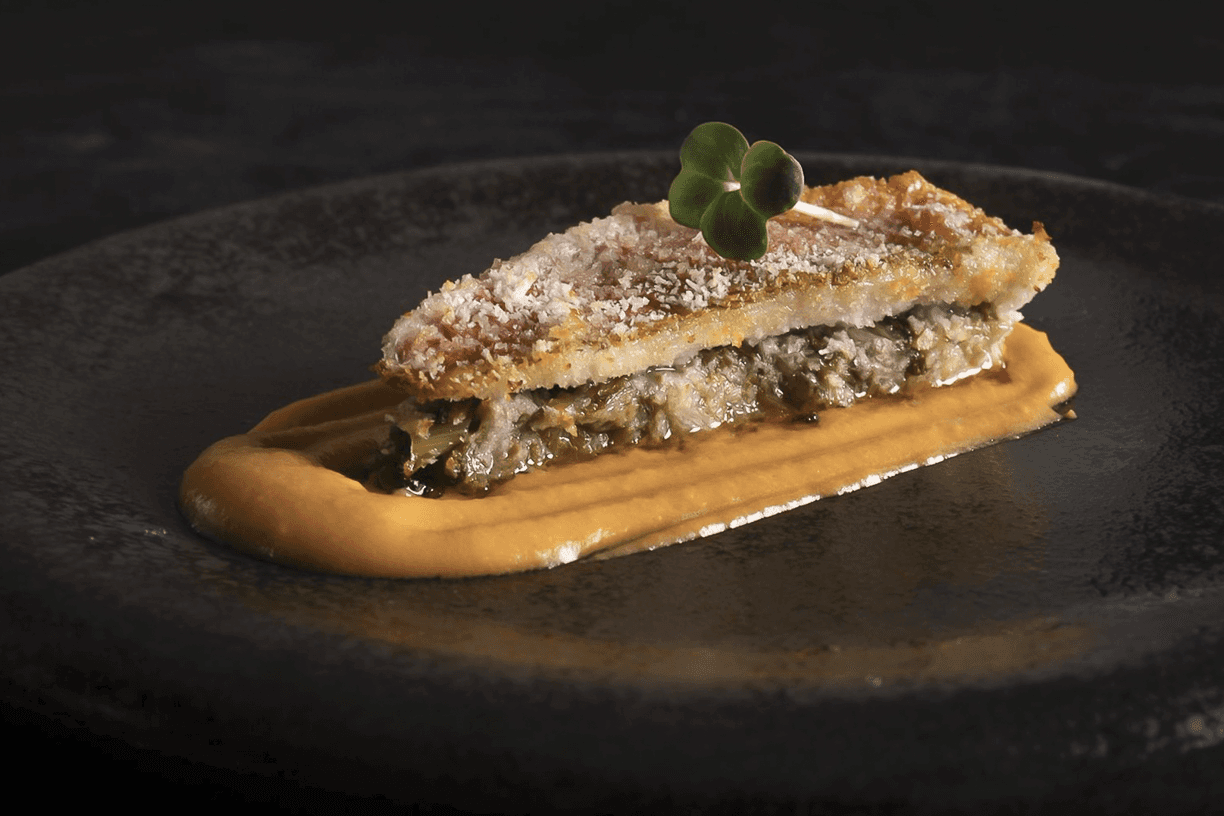
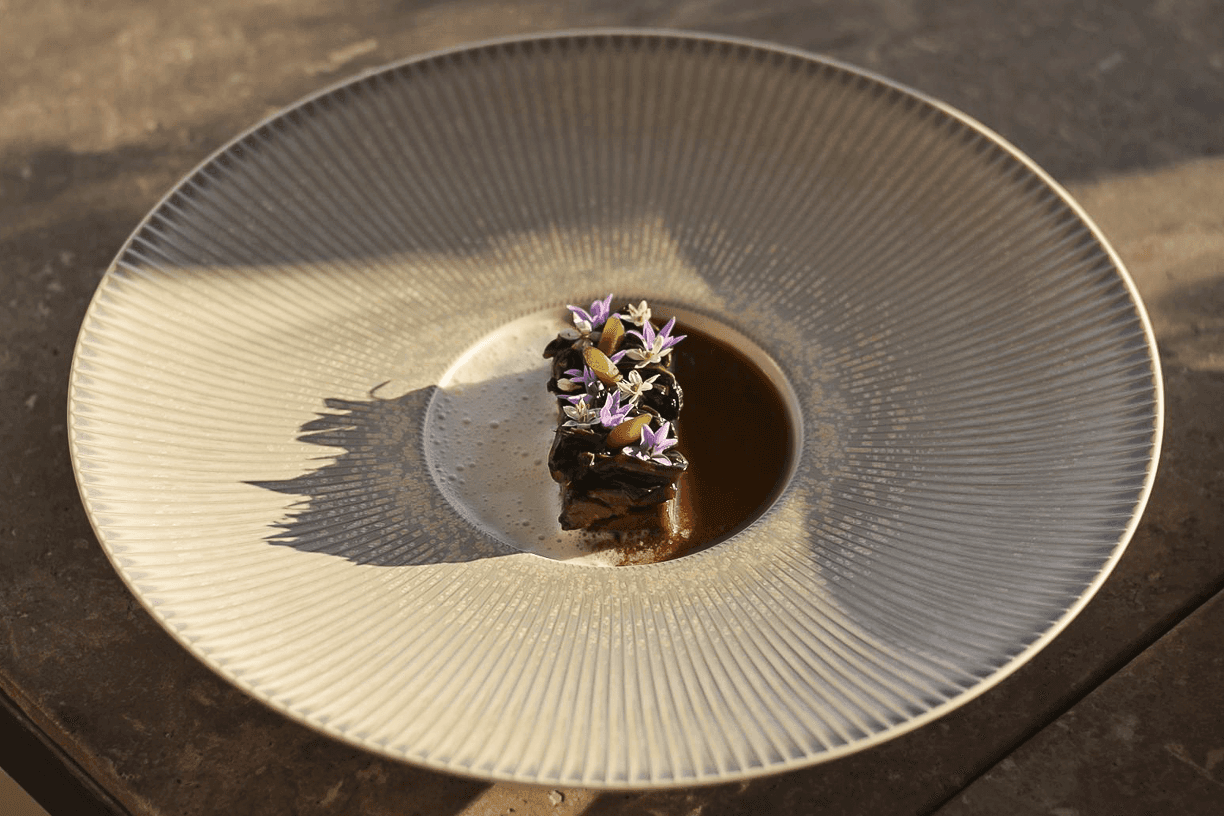
A symbolic dish that represents me is the red mullet with escarole on tomato gazpacho.

The red mullet speaks of my sea, its depth and its sincerity.
The escarole recalls my Campania, its traditions, the flavors of home.
And the tomato gazpacho from the piennolo of Vesuvius is my identity: an ingredient that speaks of my land, its energy, and its uniqueness.

Together, these elements become a dish that is not just flavor, but a story.

Sardine and escarole sandwich on Piennolo tomato gazpacho
Ingredients for four people

  • 4 large mullets

  • 300 g of escarole

  • Minced garlic, oil, and chili pepper

  • 50 g of pitted Taggiasca olives

  • 100 g of panko

  • 300 g of Piennolo tomatoes

  • 1 white onion

  • 10 basil leaves

  • 20 g of red vinegar


Preparation

Let's start with the preparation of the escarole: we wash it and cut it into julienne strips.

We prepare a base with minced garlic, oil, chili pepper, and Taggiasca olives. We sauté it slightly, then add the cut escarole and let it wilt slowly: five minutes of cooking is enough.

At this point, we fillet the mullets, assemble our sandwich, and coat it with panko. We place everything on a lightly greased baking tray.

We prepare the gazpacho: we chop the cherry tomatoes, season them with oil, salt, minced onion, and vinegar, then blend everything with a blender.

We put the mullets in the oven at 230° and let them brown for about five minutes.

Once cooked, we place the gazpacho on the plate, top it with the mullet, finish with a drizzle of extra virgin olive oil, and the dish is ready.