The scent of autumn in Tuscany has something magical about it. When I crossed the gate of the Capanna Winery, nestled among the hills of Montalcino, time seemed to slow down. It was October, and the harvest had just left its mark: clusters picked, barrels full, and a vibrant energy that could be felt in the air.
Founded in 1957 by Giuseppe Cencioni, Capanna was born from a specific desire: to break free from the sharecropping system and build something that could endure over time. With enormous sacrifices, Giuseppe purchased a run-down estate in the Montosoli area, north of Montalcino, starting to rebuild it plant by plant, day by day. In 1960, he planted the first specialized vineyard and, just seven years later, he was one of the 25 founders of the Brunello di Montalcino Wine Consortium.
Capanna was born this way: not as a business project, but as an act of freedom and vision.
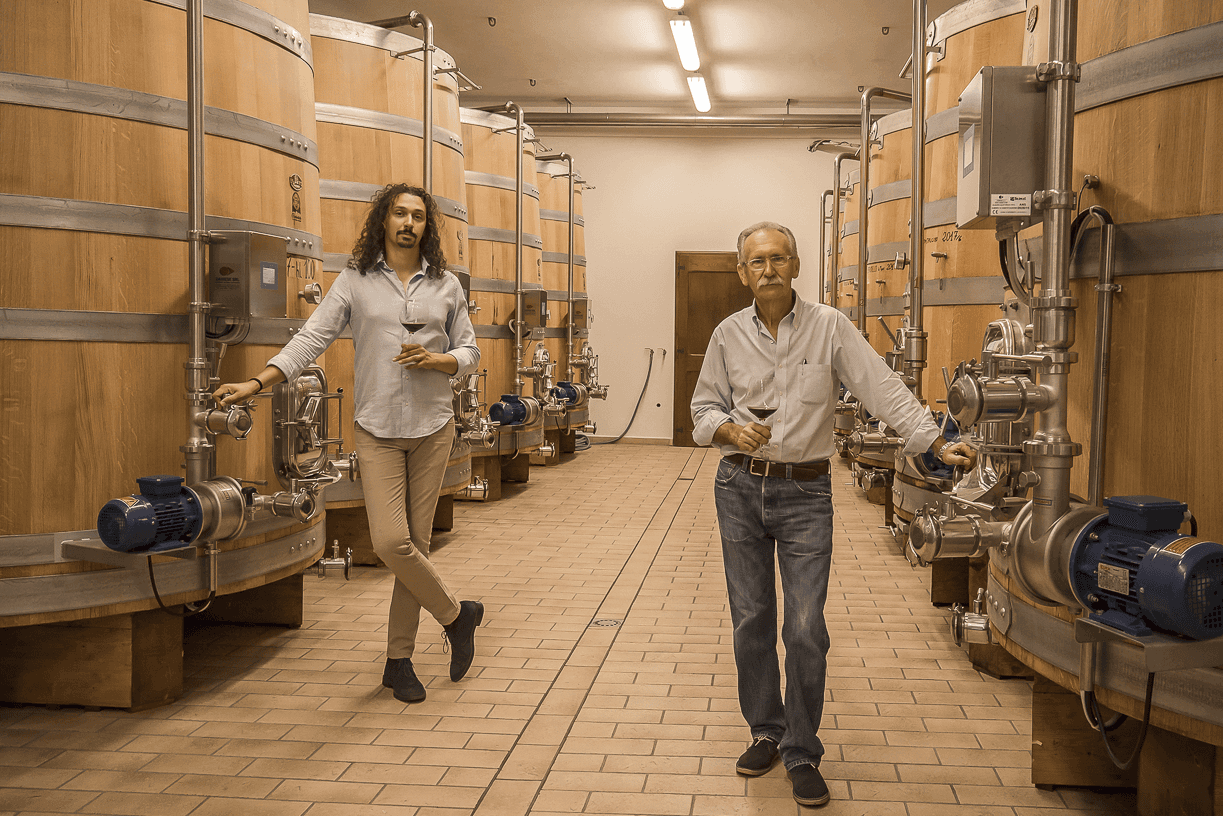
Today the winery is still family-run, led by Patrizio and Amedeo Cencioni, the third and fourth generations, who continue to cultivate the land with the same respect and responsibility inherited from their predecessors. Here, the word 'tradition' is never nostalgia, but continuity.
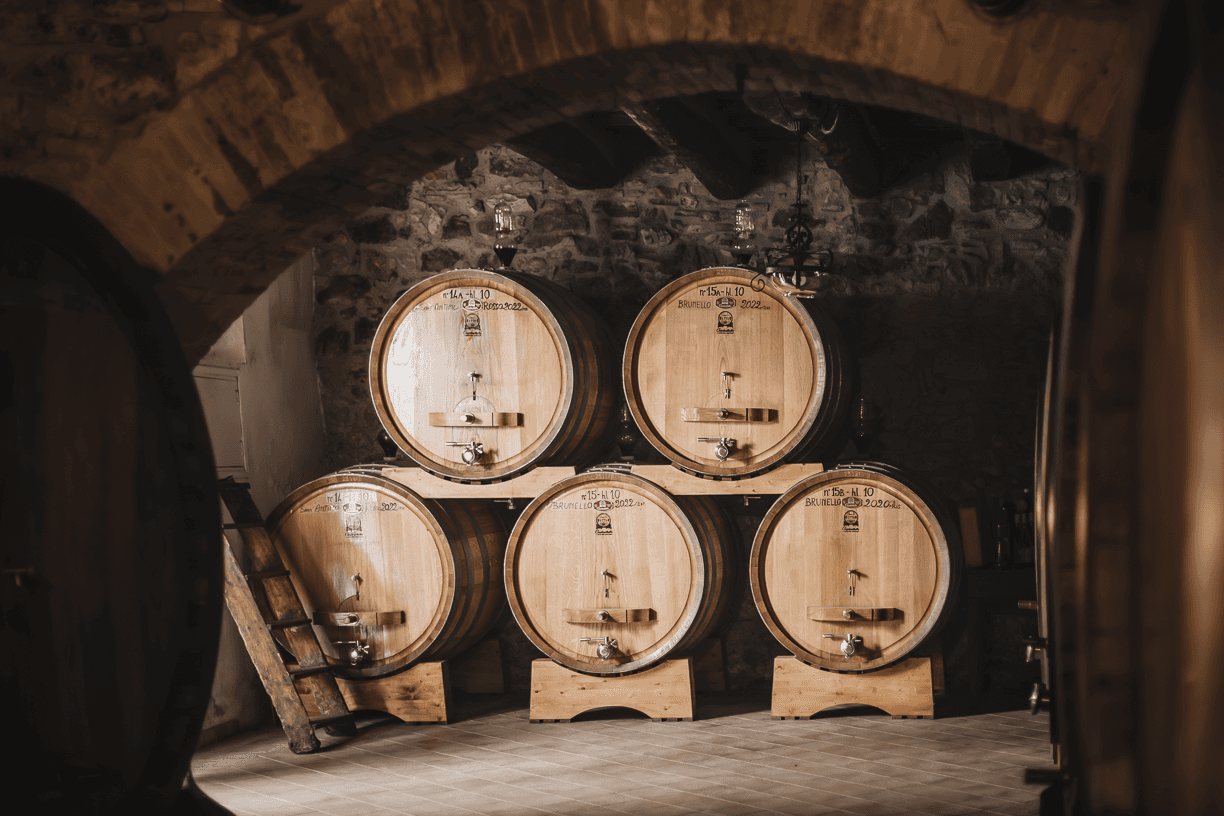
The cellar is located within a historic 18th century structure, renovated and expanded over time to accompany the growth of the company without betraying its identity. The barrel-aging room still partly develops in the original premises, preserving the architectural elements of the Tuscan countryside: stone walls, exposed beams, and allowing natural light filtering through slowly. Each space tells a story made of work, patience, and industrious silences.
The cellar is located within a historic structure from the 18th century, renovated and expanded over time to accompany the growth of the company without betraying its identity. The barrel-aging room still partly develops in the original premises, preserving the architectural elements of the Tuscan countryside: stone walls, exposed beams, natural light filtering through slowly. Each space tells a story made of work, patience, and industrious silences.
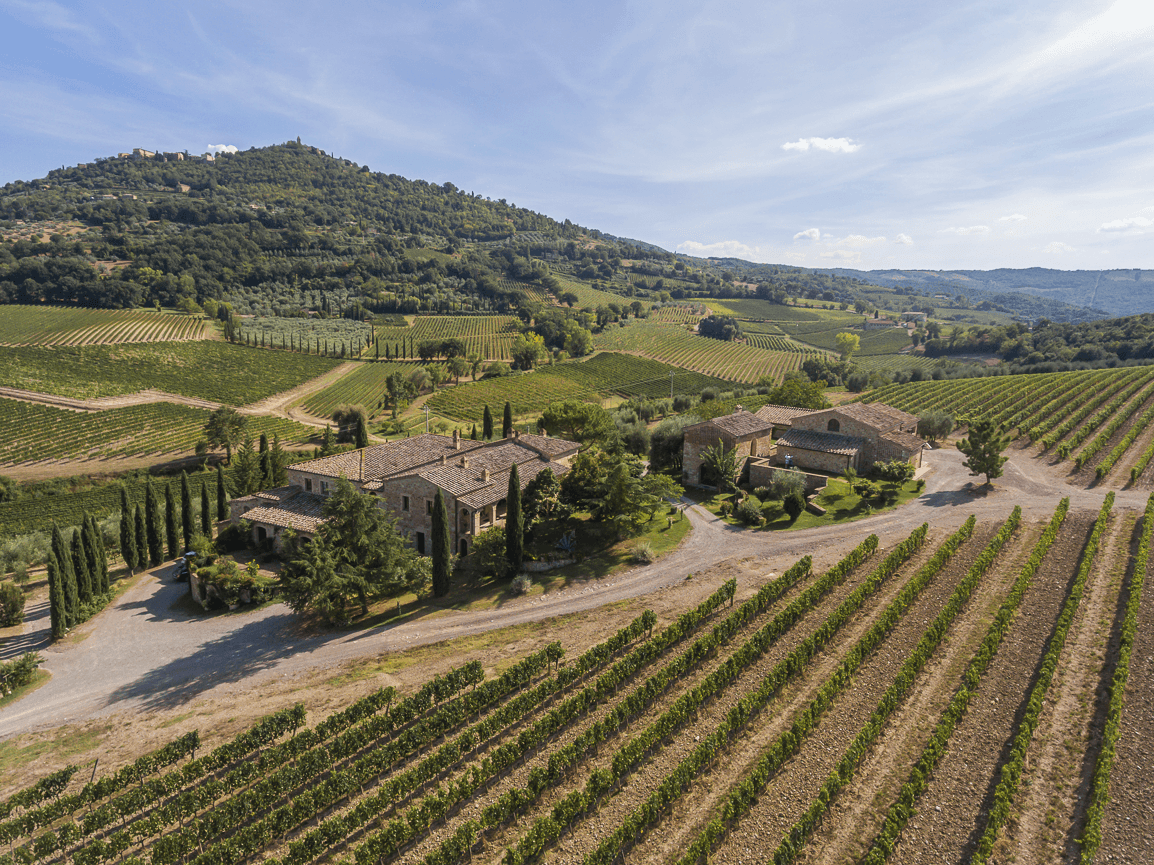
The Capanna primarily cultivates Sangiovese, the noble grape from which Brunello di Montalcino is produced, vinified in purity according to a strict specification. The vineyards are located between 250 and 300 meters above sea level, in the historic cru of Montosoli, and benefit from an ideal microclimate. Alongside Sangiovese, there are also Merlot, Pinot Grigio, and ancient strains of Moscato Bianco dating back to the 16th century, a living testimony of the agricultural layering of the territory.
The vineyards, in autumn, stretch out like golden and red carpets, dotted with leaves dancing in the wind. Walking between the rows gives the feeling of stepping into an impressionist painting: each step is accompanied by the rustling of leaves underfoot and the scent of fermenting must.
It is in those moments that wine stops being produced and starts to becomes landscape.
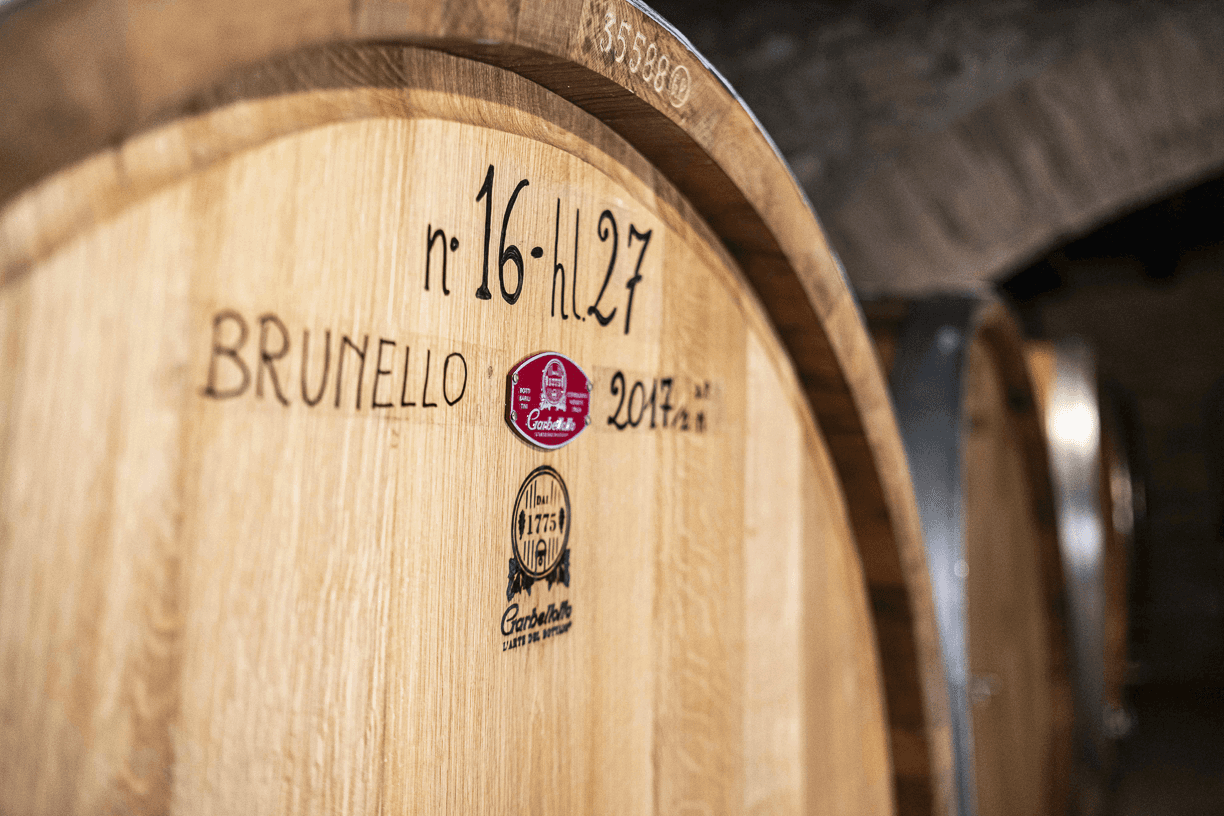
The visit to the winery was primarily a human encounter. I listened to stories from those who speak of wine as one speaks of a child: with pride, respect, and a sense of responsibility. I tasted the Brunello di Montalcino directly from the barrel, perceiving its power and elegance still in the making, like a character that is forming without haste.
After the visit, I had the privilege of participating in a private tasting. In an intimate and quiet setting, guided by someone who knows every nuance of those wines, I tasted different vintages of Brunello and Rosso di Montalcino. Each glass told a different story: the warmest and most generous vintage, the more austere and upright one, the surprising one. It was a moment of deep listening, not only to the wine but also to myself.
After the visit, I had the privilege of participating in a private tasting. In an intimate and quiet setting, guided by someone who knows every nuance of those wines, I tasted different vintages of Brunello and Rosso di Montalcino. Each glass told a different story: the warmest and most generous vintage, the more austere and vertical one, the surprising one. It was a moment of deep listening, not only to the wine but also to myself.
Here, time is not measured in harvests, but in the choices that endure.
The day ended with a sunset that looked like a painting. The colors of the sky merged with those of the land, and the silence was broken only by the song of the birds. In that moment, I understood that Capanna is more than a winery: it is a place of the soul, where wine becomes a story and the landscape a living memory.
The day ended with a sunset that looked like a painting. The colors of the sky merged with those of the land, and the silence was broken only by the song of the birds. In that moment, I understood that Capanna is not just a winery: it is a place of the soul, where wine becomes a story and the landscape a living memory.