In collaboration with:
Slow Food Burundi
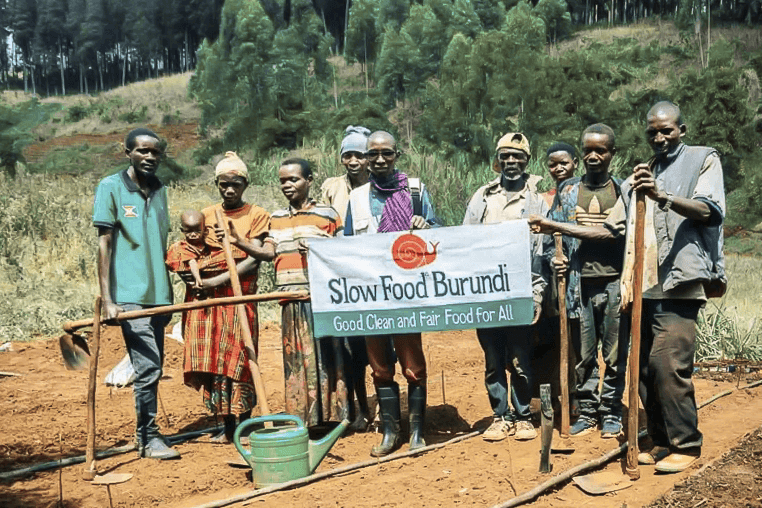
In the heart of Burundi, among the hills of Karuzi, there is a community that rewrites the relationship between land and people every day, establishing itself as a committed actor in promoting a sustainable food system rooted in the conservation of natural resources and the value of local knowledge. It is called “Initiative pour la Protection de la Biodiversité – Karuzi” and, more than a project, it is a living laboratory focused on training, awareness-raising, and active community involvement.
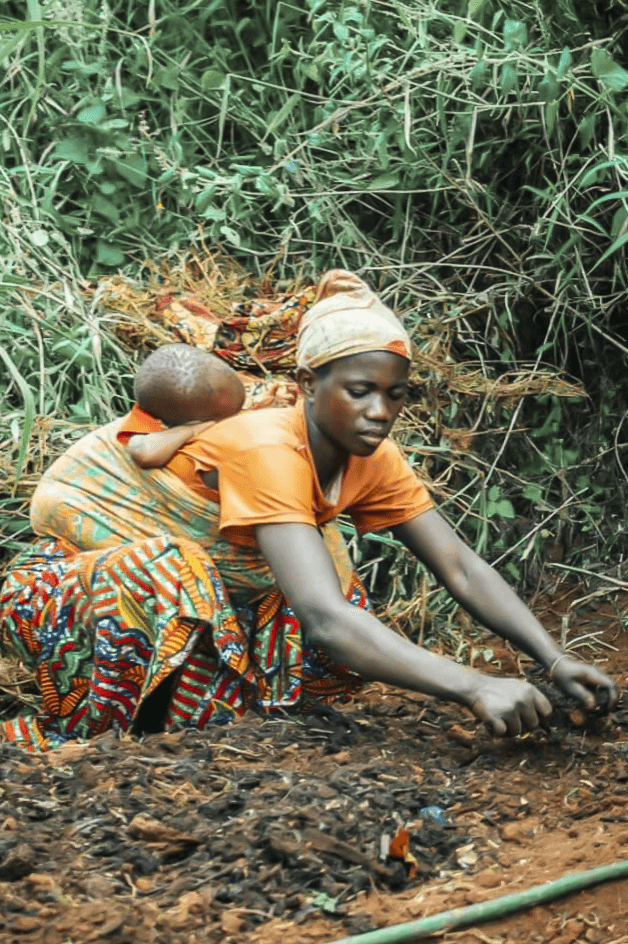
Here sustainability is not a slogan, but knowledge passed down and built together. In agroecology training sessions, farmers, young people, and women come together to learn to see the soil with new eyes: turning waste into a resource, distinguishing what nourishes from what poisons, giving back to the earth what belongs to it. Composting thus becomes an almost daily act of care, while waste sorting marks a first, concrete step toward a possible balance.
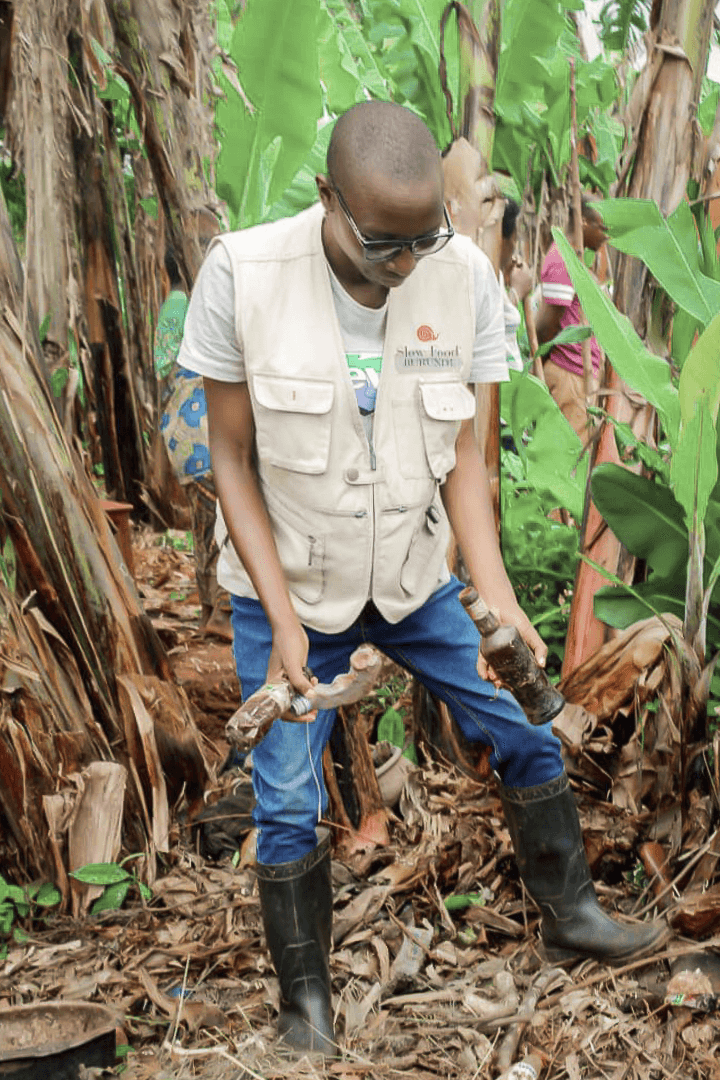
It is not a path without obstacles. Particular emphasis is placed on the areas where plastic continues to be buried in the soil, silent and invisible, yet capable of jeopardizing fertility and yields. It is precisely from here that one of the community’s most urgent battles arises: to show, with practical examples, that an alternative exists. Separate, reduce, reuse: small gestures that, when combined, change the fate of the fields.
Thus, training activities represent a concrete tool for combating harmful practices and promoting the sustainable management of resources.
Then there are the Slow Food gardens, scattered among schools and villages, which perhaps better than anything else tell the story of this transformation. Created at both the community and school level, they are not just cultivated plots, but places for gathering, learning, and the future. Between the rows, young people discover what “good, clean, and fair” food means, while communities strengthen their bonds and independence, finding in the land a concrete response to food security.
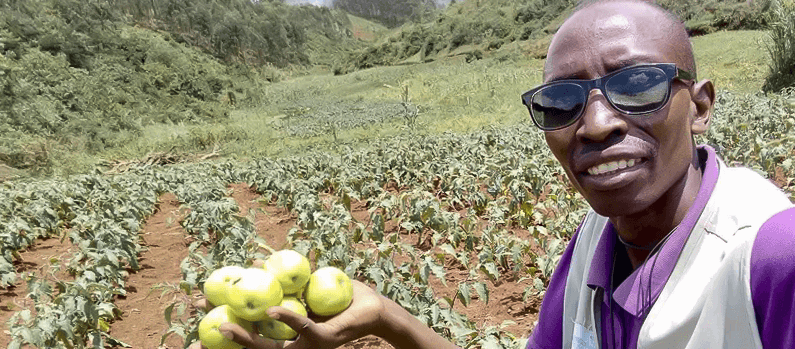
And next to the vegetable gardens, another heritage is taking shape: that of local eggplants, the so-called African eggplants. Resilient varieties, tied to the land and rich in nutritional value, now threatened by the loss of traditional seeds. For this reason, the community is mobilizing: it gathers, preserves, and shares.
The protection of local varieties thus becomes a central element in preserving biodiversity, cultural identity, and food security.
Beyond its local impact, this initiative embodies a broader vision: a future in which communities regain control of their food systems, value their heritage, and sustainably protect their ecosystems. In Karuzi, Slow Food is more than a movement: it is a driving force for social and environmental transformation. A model that shows how organized local communities can lead real, lasting, and sustainable change.