In collaboration with:
Presidio Slow Food Pecorino di Monte Poro
Crossing the plateau of Monte Poro, stretching towards the sea of the Coast of the Gods, in the sub-central part of the Tyrrhenian Calabria, is an experience that stays with you. The gaze wanders over lush, undulating green expanses. Small farming villages dot the landscape. Old farmhouses emerge from still untouched pastures.
Along the plains, shepherds can be seen at dawn, guiding their flocks into the fields. They guard the land almost unknowingly, keeping alive the biodiversity and balance of these places. Here, the landscape is not a backdrop: it is a living part of the cheese.
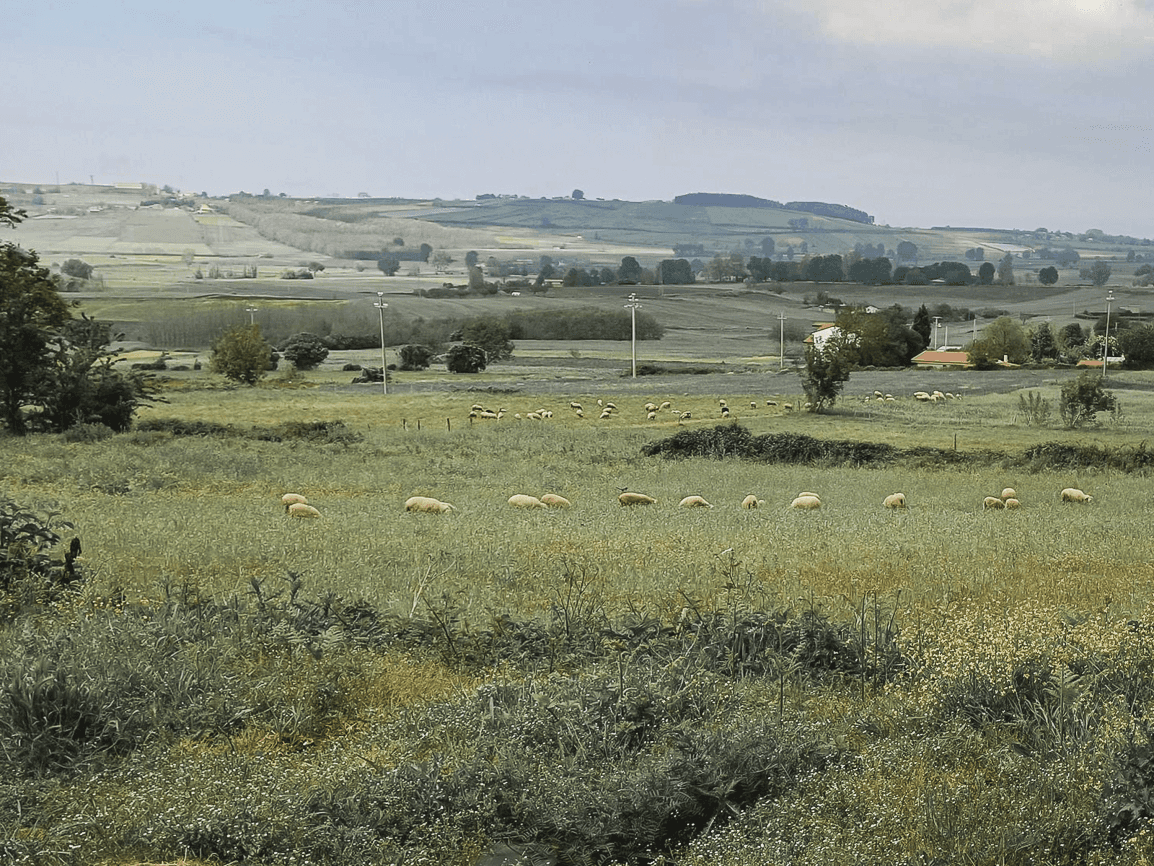
The unique topography of the plateau, the abundance of aromatic wild herbs, and a particularly humid microclimate make these pastures fertile even in the hottest months. The rich and generous soil allows for thriving crops without artificial irrigation. Chili peppers and corn grow lushly, concrete signs of a nature still in harmony. It is in this context that, since ancient times, sheep farming has been practiced in the wild and a raw milk pecorino cheese is produced using artisanal techniques passed down from generation to generation.
An ancient knowledge that enhances the aromatic nuances of milk, directly influenced by the local vegetation.
Already in 1571, the Calabrian historian Gabriele Barrio, in his De Antiquitate et situ Calabriae, spoke of an "excellent cheese" produced in this area and appreciated everywhere. A sign that the identity of the Pecorino del Monte Poro has deep roots in centuries of history.
Driven by curiosity about this symbolic cheese — which for generations has represented the main source of livelihood for shepherding families — I reached a place that today safeguards its soul: the Masseria Monteporo. Here, pecorino has become a Slow Food Presidio, a recognition that protects traditional productions at risk of disappearing.
It is in this dimension of rural familiarity that I met Antonio Crudo, a cheesemaker with long experience, awarded the recognition of the Cheese Resistance at the "Cheese" event in Bra. Curved back, hands marked by labor, bright gaze of memory.
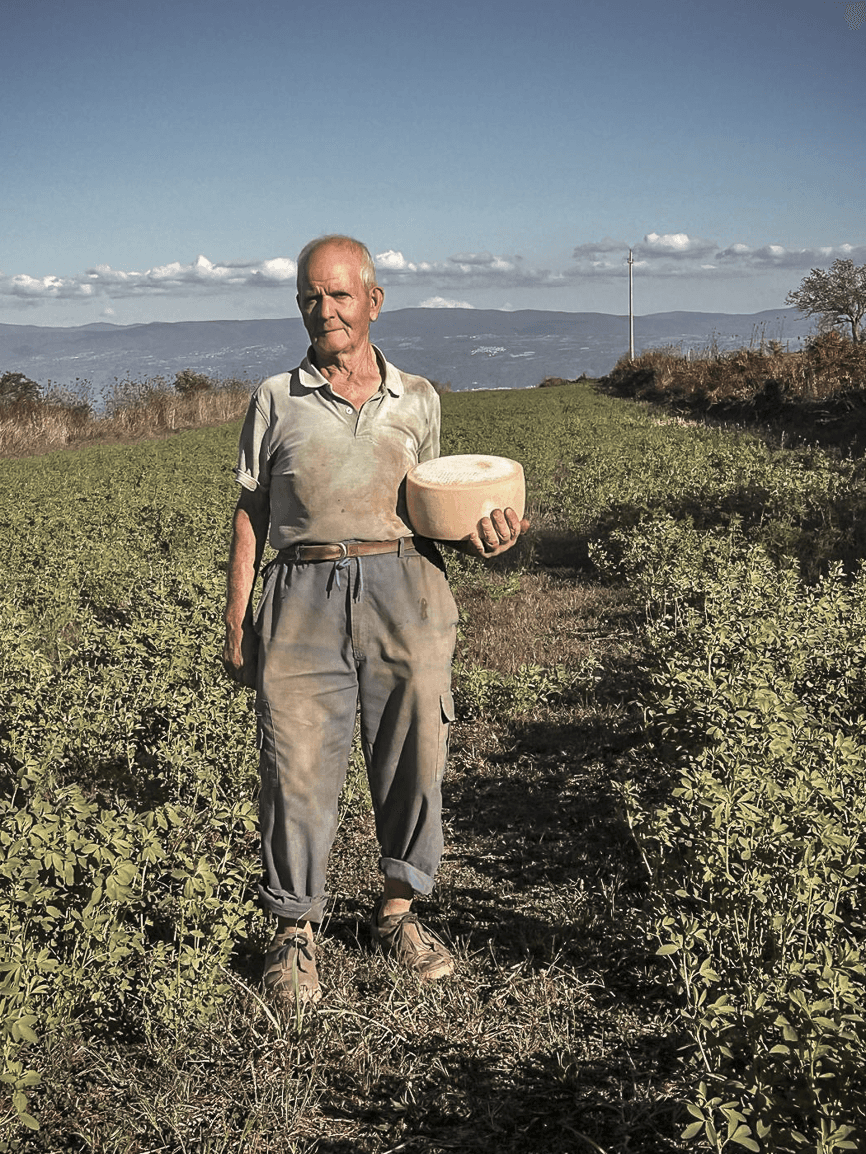
He told me about the endless dawns spent milking, the milk transformed into cheese and ricotta, the frugal breakfasts with stale bread soaked in warm whey. Then the journey, with a bucket full of fresh cheese and wicker baskets loaded with ricotta, along steep paths that led to the fishing villages below the plateau. We would leave and return in the dark. Every day. Festivals included.
It was not just work: it was survival, dignity, belonging.
The production cycle of this cheese starts with the milking of Comisana, Sardinian, and, in some cases, Malvizza (a less productive native breed but capable of offering extraordinary quality milk) sheep. The evening milk is combined with that of the morning; it is filtered and heated in copper or steel boilers until it reaches 32–36 °C. Natural lamb rennet is added.
Coagulation occurs in 30–50 minutes. Next, the curd is broken with a wooden tool, the "rojo", until clumps as large as a grain of rice are obtained. After a short rest, the mass is collected by hand and placed in molds to drain the whey.
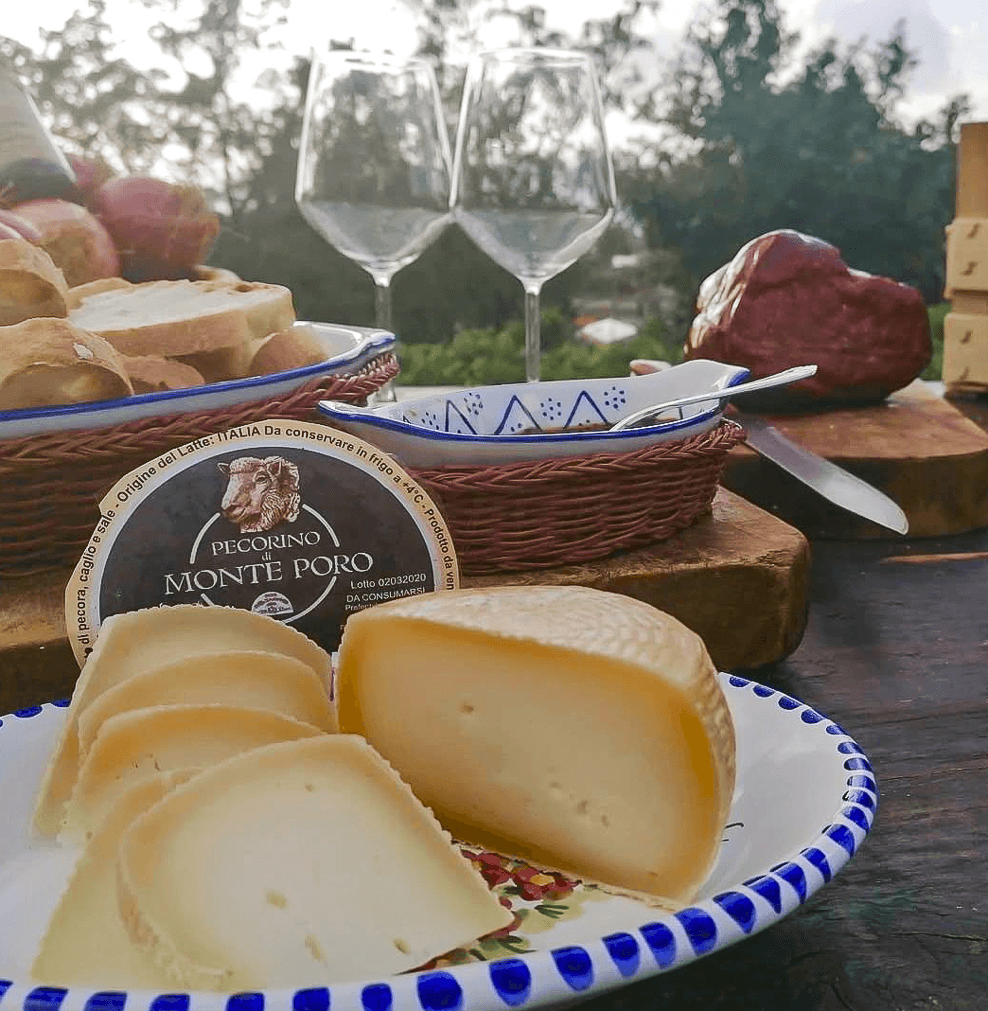
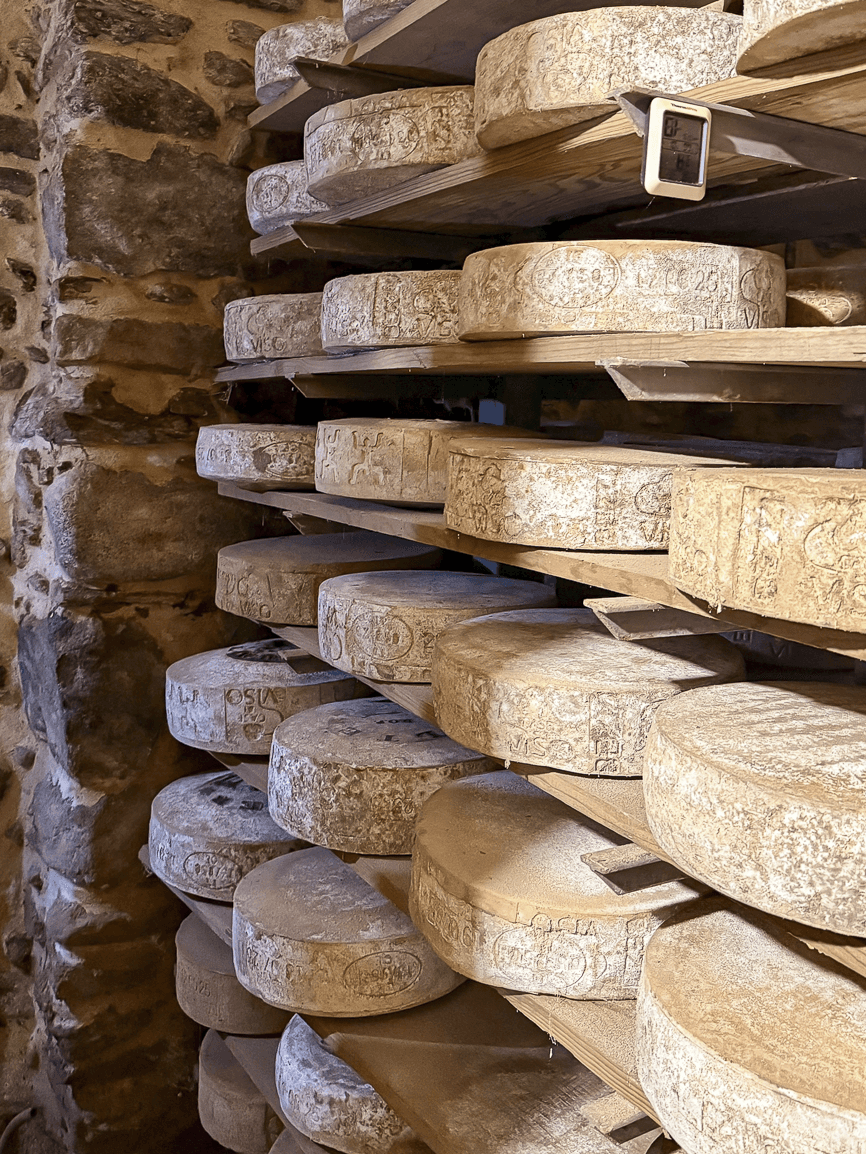
After about 6 hours, the dry salting begins. After 24 hours, the shapes start the aging process. In one month, a fresh Pecorino cheese is made. Between 60 and 90 days, a more intense and flavorful product is obtained. Some forms are coated with olive oil and Tripizzi chili pepper, a typical variety from the Poro area, to aid in preservation.
Today, the remaining producers are few: small family businesses that resist among those who prefer to sell milk to large farms and those who, on the other hand, stubbornly continue to work with raw milk.
Among them is Gabriele, Antonio's son, who takes up the mantle with courage and determination.
To resist here means to continue transforming milk into memory. The Pecorino of Monte Poro is not just a niche product. It is concrete proof that a territory can survive if someone chooses, every day, to remain faithful to it.