
In collaborazione con:
Presidio Slow Food Peperone quadrato della Motta di Costigliole d’Asti
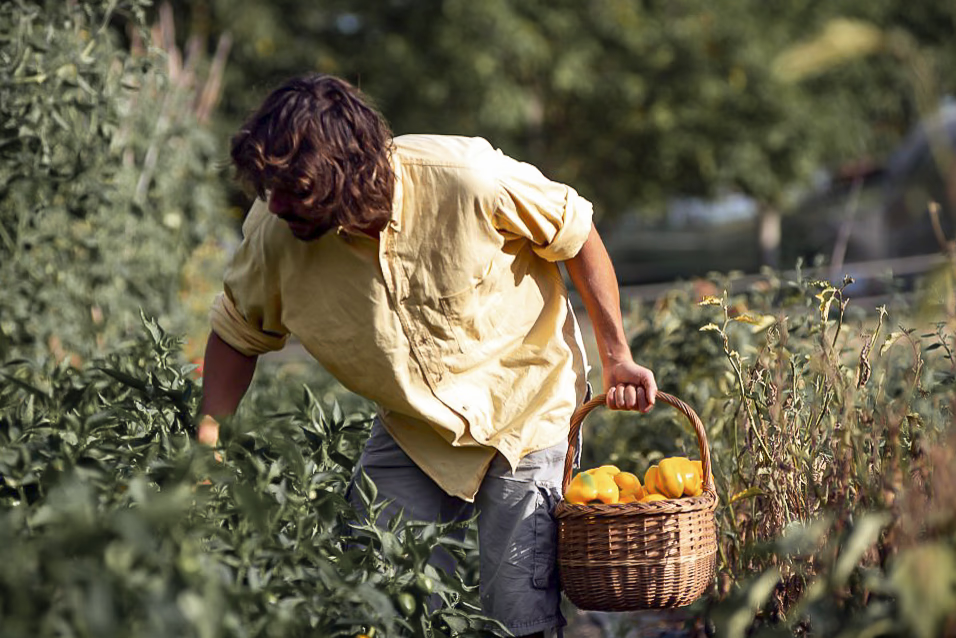
C’è un ortaggio che va oltre il cibo e racconta un territorio, un sapere tramandato nel tempo e una volontà ostinata di resistere. È il Peperone quadrato della Motta di Costigliole d’Asti, presidio Slow Food, coltivato da oltre un secolo nelle pianure lungo il Tanaro, in un’area del Piemonte dove l’orticoltura ha segnato profondamente la vita delle comunità locali. Negli ultimi decenni questa coltivazione è però andata progressivamente riducendosi. La mancanza di ricambio generazionale, la concorrenza delle produzioni meridionali e internazionali e stagioni sempre più instabili ne hanno limitato la diffusione, spingendo molti agricoltori a orientarsi verso attività considerate più redditizie, come la viticoltura. Eppure qualcosa è rimasto. C’è chi ha scelto di non lasciarlo andare, come Stefano Scavino, unico produttore di questo ortaggio.
Da bambino lo vedeva sui banchi del mercato accanto a sua nonna e, da adulto, si è chiesto perché quel peperone fosse scomparso.
Da quella domanda è iniziata una ricerca paziente di semi ormai fuori commercio, condotta tra appunti, contatti e le memorie di chi lo coltivava un tempo. Dopo molte tracce interrotte, sono riemersi semi risalenti agli anni Ottanta. Non tutti erano però vitali, ma quelli conservati correttamente, essiccati e custoditi al freddo nella banca dati dell’Università, avevano saputo resistere al tempo, permettendo a quella storia di tornare nel presente.
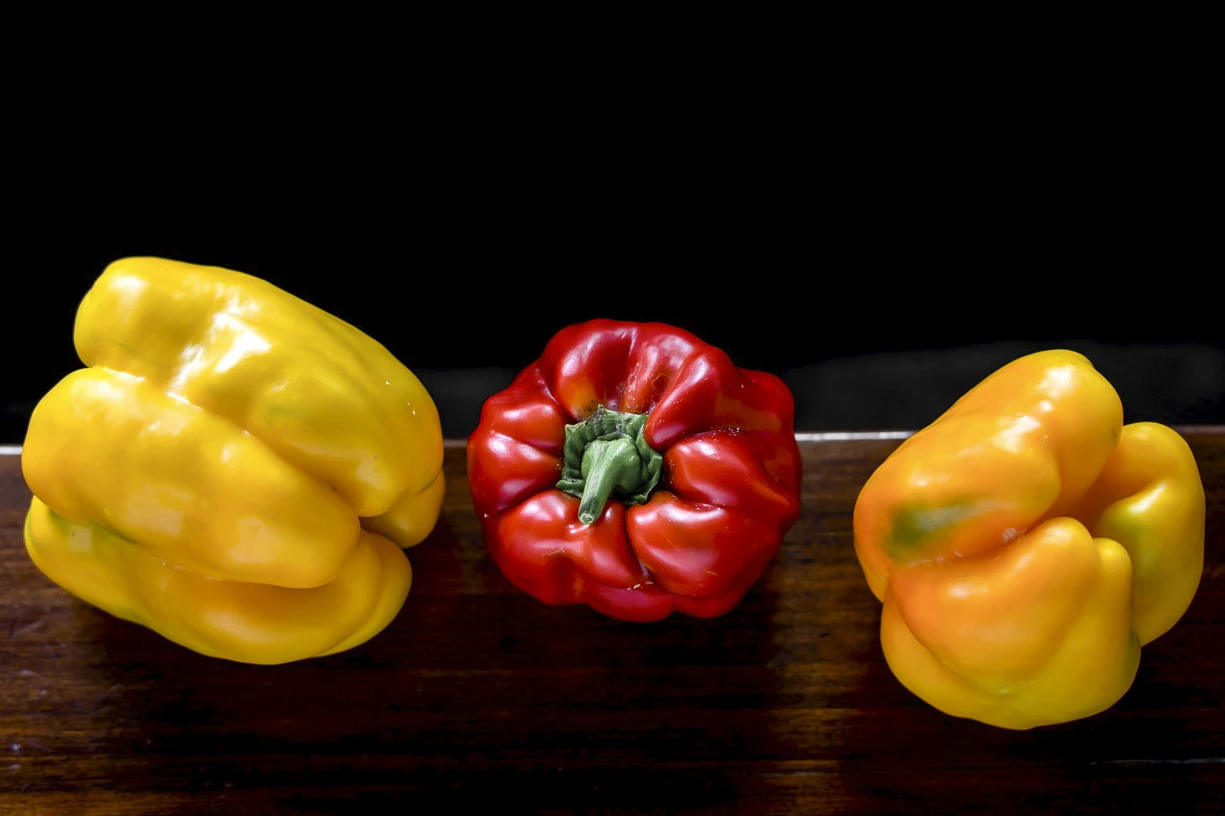
Quello quadrato non è un peperone qualunque. La sua forma è realmente compatta e quadrata, diversa da quelli allungati che dominano i mercati. Le sue pareti carnose accolgono un gusto intenso e dolce, mai piccante, con un alto contenuto di zuccheri che lo rende piacevole anche crudo o semplicemente arrostito.
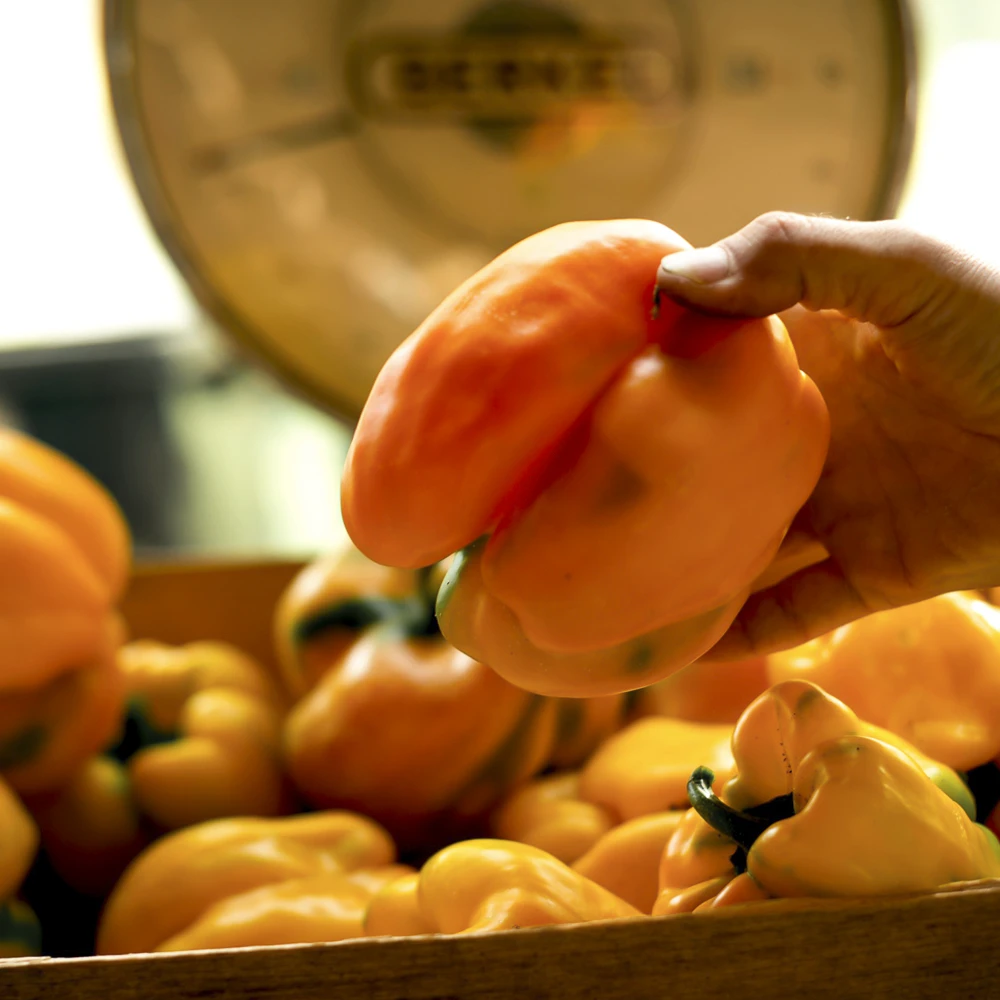
La pianta non è vigorosa e richiede cure attente, dalla semina di febbraio allo sviluppo primaverile fino alla raccolta, che inizia ad agosto e può protrarsi oltre. Per chi la coltiva, ogni stagione diventa un esercizio di equilibrio, pazienza e lentezza. Molto resta però da sperimentare, perché adattare questa varietà alle condizioni climatiche attuali non è semplice. Le stagioni non sono più quelle di un tempo e sbalzi termici improvvisi, piogge intense e ondate di caldo mettono alla prova una coltura che vive di stabilità e misura.
“Il peperone quadrato non è solo un ortaggio: è una memoria da custodire con pazienza.”
Così lo definisce Stefano Scavino. E sottolinea: “Non serve esagerare, parla da sé”. Ma l’azienda di Stefano non coltiva solo il peperone. Oggi la struttura si sviluppa su circa due ettari e mezzo di ortaggi diversi, fra cui il carciofo astigiano del Sorì (un altro Presidio Slow Food), cavoli di varie tipologie, pomodori, zucchine trombetta, pastinaca, barbabietole colorate. Tutto secondo tecniche biointensive, che proteggono il suolo riducendo l’impatto ambientale e favorendo una produttività più sostenibile.
La collaborazione con il ristorante Guido di Serralunga d’Alba, stella Michelin e punto di riferimento della tradizione piemontese, ha dato a questo peperone nuove possibilità espressive. Qui viene reinterpretato in piatti come il Peperone quadrato di Motta di Costigliole farcito con tonno e capperi, una ricetta in cui le materie prime dialogano in un equilibrio preciso. Tradizione, ricerca e tecnica si intrecciano in preparazioni che lo vedono protagonista anche in involtini e piatti di ispirazione contemporanea, creando un ponte naturale tra la memoria gastronomica e la cucina di oggi.
Tradizionalmente, i peperoni vengono conservati sott’olio o in aceto con i raspi d’uva, un’abitudine di casa nella zona, perfetta da servire con la bagna cauda. Ma il racconto gastronomico di questo ortaggio va oltre. La preparazione che Stefano ama di più deriva da un grande gastronomo piemontese e sono i peperoni con prezzemolo e aglio, semplici ma carichi di profumi e storia.
La storia dei Presìdi Slow Food nasce proprio da prodotti come il Peperone Quadrato di Stefano Scavino.
Meno icone da vetrina e più voci da ascoltare. Secondo il racconto, l’idea di creare i Presidi sarebbe maturata in Carlo Petrini, fondatore di Slow Food, proprio durante una cena in Piemonte, e proprio quando si rese conto che la qualità dei peperoni disponibili non rifletteva più la tradizione locale. Da quella constatazione nacque l’intuizione di dare vita a un progetto di tutela concreto, capace di proteggere le varietà antiche e di mettere al centro chi le custodisce, rendendolo protagonista di una narrazione più ampia e condivisa.
Oggi i peperoni quadrati finiscono rapidamente: la domanda supera l’offerta. Stefano spera che altre aziende si uniscano a questa causa, perché lavorare insieme renderebbe più semplice affrontare le sfide agricole e climatiche. Il prodotto è già conosciuto e apprezzato, non manca interesse, ma serve una rete più ampia di coltivatori per renderne la produzione più stabile e diffusa. In un territorio dove la viticoltura ha preso il posto dell’orticoltura perché più redditizia, continuare a coltivare questo peperone non è solo una scelta agricola, ma un atto di identità culturale.