Before becoming an entrepreneur, Savino Maffei travels the world. In 1970, he boards the Galileo ship of Lloyd Triestino as a baker. The route to Australia takes almost a month. On board, between first and second class, he assists the chef and prepares fresh pasta for the passengers. It is there that his vocation takes definitive shape. "On the ship, I realized that fresh pasta was my path. It was what I truly knew how to do." His return to land coincides with the decision to start.
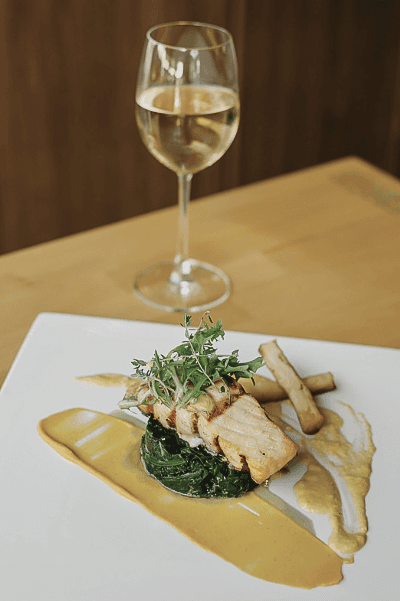
It’s the classic model, the one we’re used to. And it’s not even a modern concept. As early as the Middle Ages, the relationship between food and wine was seen as a natural, everyday, almost instinctive pairing.
In the Carmina Burana it says: “When we’re at the tavern, we don’t think about death, but about wine and food, which go well together.”
If this balance has worked for centuries by starting from the dish, what happens when we decide to turn the order of things upside down? When wine takes center stage and food enters the scene only afterward, as a natural consequence? If the classic pairing begins with the dish and ends with the wine, reverse pairing changes the script: wine sets the rhythm and food becomes the gastronomic response. This is not a recent invention, but a format that has grown alongside the culture of tastings and experiential menus. In Italy, it has been described as a "reverse menu" since at least 2014.
Reverse pairing arises precisely from this shift in perspective. Not as a technical exercise, but as an act of listening. You open a bottle without already having a recipe in mind. You taste it, observe it, and try to understand its character, its tension, its direction. Only later do you begin to imagine what might belong beside it, without forcing it and without overlapping.
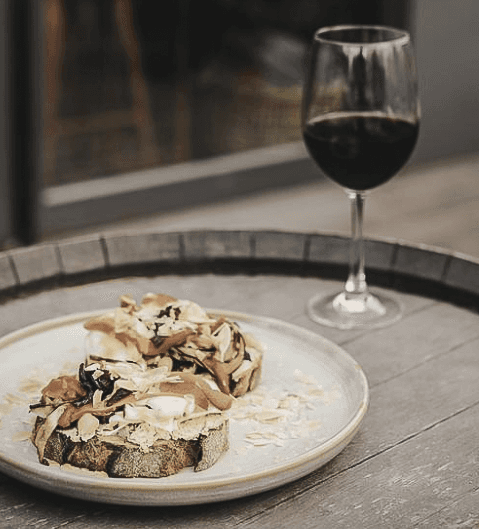
In this approach, the dish is no longer the starting point, but the destination. It is built around the sensations the wine conveys, following what it suggests and even what it doesn’t ask for. It is a more instinctive, less scripted way of cooking that requires time, attention, and a willingness to listen.
Wine thus ceases to be a complement and becomes the source of the story. The food is introduced as an act of balance, not of protagonism.
Reverse pairing is fascinating precisely because it forces you to slow down and make room for the sensory experience. This approach is not confined to theory or personal experimentation. For years, in some contemporary kitchens, especially in fine dining, wine has entered the creative process long before the dish. Vertical tastings, menus built around a bottle, experiences in which the sommelier works side by side with the chef. Reverse pairing thus becomes a narrative tool, a way to tell the story of wine not as an accompaniment, but as the origin of the gastronomic gesture.
The first time I tried applying this approach, I wasn’t trying to overturn a rule. I opened a bottle of Ruchè di Castagnole Monferrato without having a clear idea of what I was going to cook. I tasted it slowly: an aromatic but dry wine, with notes of rose, violet, spices, and an unexpected tension. It wasn’t asking for a complex dish, nor for a structure that would mimic it. It was asking for balance.
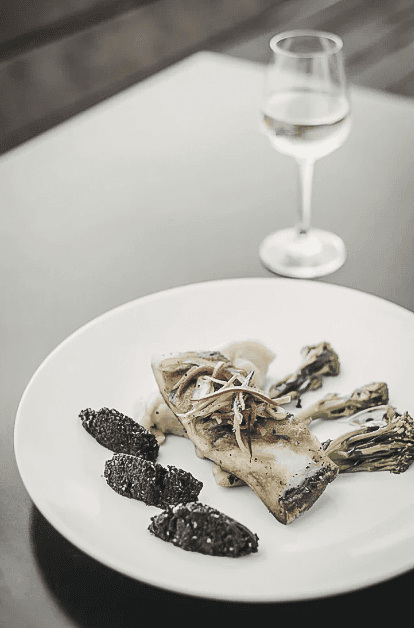
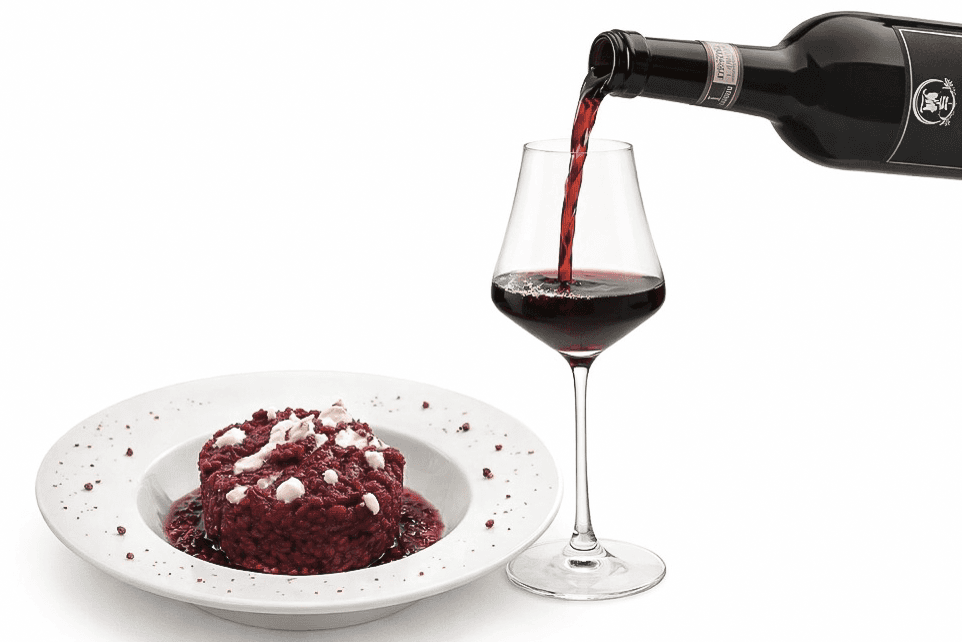
Only later did I begin to think about what could accompany it, something that would respect its aroma without overpowering its voice. The choice fell on a berry risotto, played more on acidity than sweetness, essential and restrained. A dish capable of dialoguing with the floral and spicy notes of the Ruchè, creating a natural harmony without any forcing.
In that moment, the meaning of reverse pairing became clear: not finding the right wine for a dish, but allowing a dish to be born by listening to the wine.
And perhaps this is exactly what reverse pairing reminds us: that at the table, not everything has to be decided in advance. Because, as Michel de Montaigne suggested, pleasure lies not so much in the destination as in the path we choose to follow.