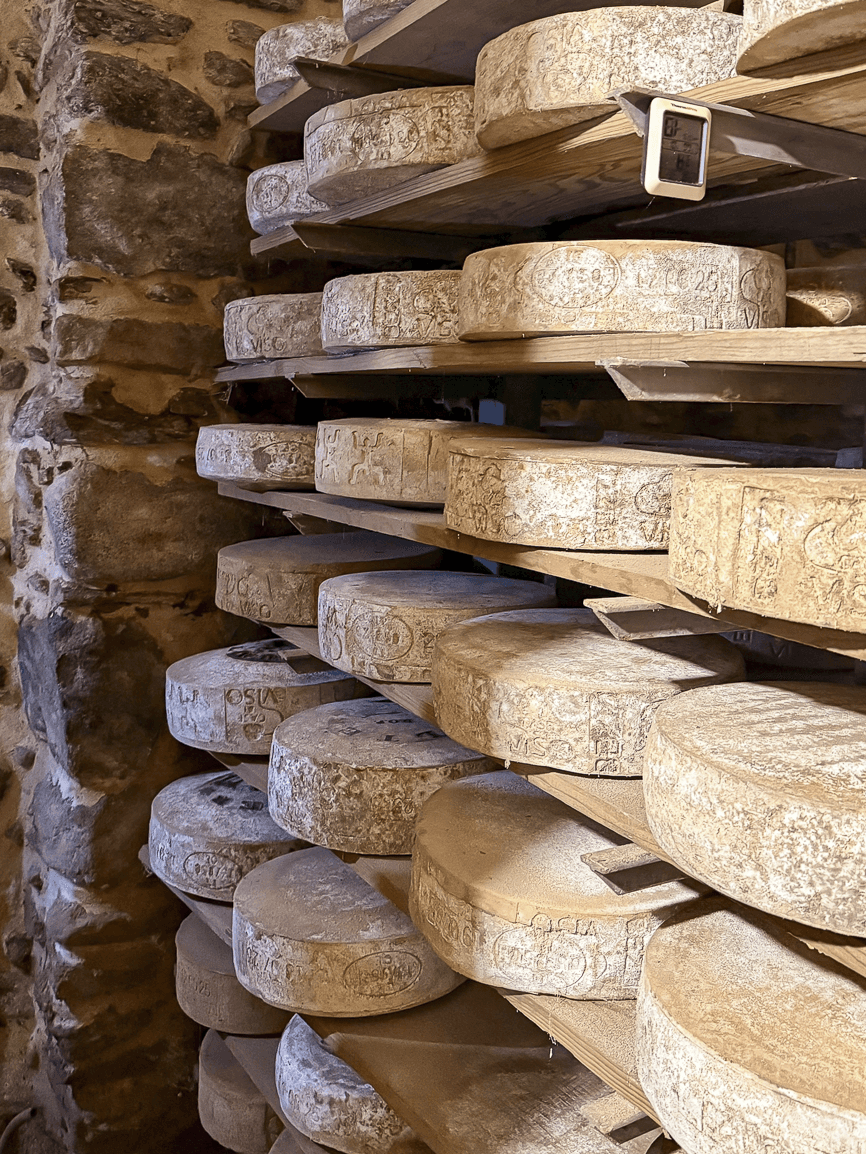
There is a Lombard valley that, climbing from Lake Iseo towards the Adamello Alps, tells an ancient story made of stone, pastures, and silences: it is Valcamonica. Famous for its prehistoric rock engravings, this land also holds a less visible but equally defining heritage: its dairy art. Here, the environment is not just a backdrop, but a fundamental ingredient. The crisp high-altitude air and the aromatic herbs of the pastures contribute to defining the unmistakable aftertaste of the Camuni products.
Behind some of the most representative forms of the valley lies the skilled and thoughtful hand of Andrea Bezzi, a producer who does not just pass down ancient knowledge but continually seeks to improve and innovate it. Andrea is a cheese maker by birth. His parents produced cheese, and he remembers: "With dad at five years old, I was already up milking the cows." The family arrived at Case di Viso about thirty years ago, after spending some time in a mountain pasture above Ponte di Legno. They have dedicated themselves to this craft for generations.
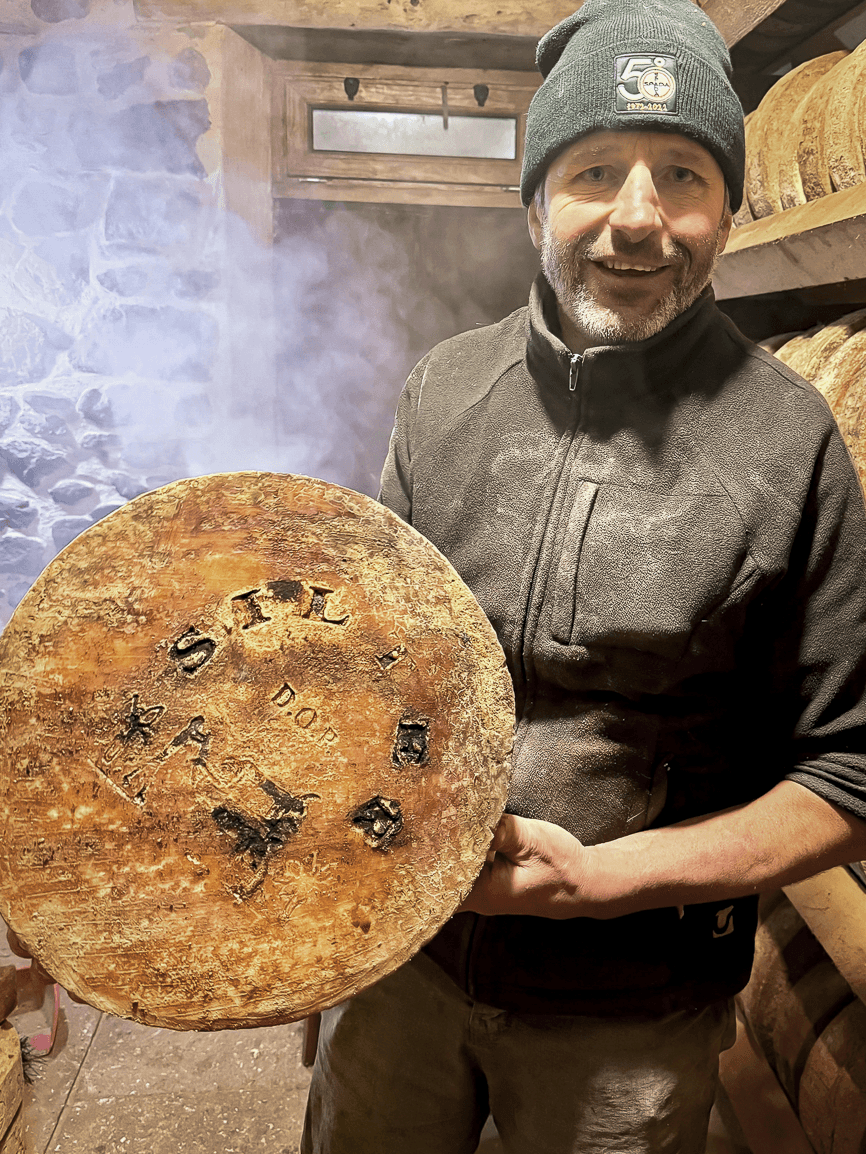
Today Andrea carries on the tradition with a clear philosophy: to maintain tradition, but without fear of improving it. "We must always try to keep traditions, but also to change and innovate them. The tastes that existed fifty years ago are not the same as today's." This means, for example, reducing the use of salt, which was excessive in the past, and working through trials until achieving the desired balance.
"You have an idea, you try it and see how it goes: you shouldn't be afraid to experiment."
His work is deeply connected to the alpine environment. He raises native breeds of cows such as the original Bruna, the Grigia Alpina, and some Pezzate Rosse. The calving is timed so that the peak of lactation coincides with summer, when the grass in the pastures is richest. Andrea also uses a mobile milking machine – the first in Valcamonica – designed together with his brother. This system allows for following the grazing as the animals move up in altitude, ensuring they always eat fresh grass, the so-called "first growth."
Transhumance begins at Ponte di Legno in mid-April and slowly moves upwards until it settles at Case di Viso between spring and summer, remaining there until early October or November. Case di Viso is a tiny alpine village situated over 1750 meters in the Stelvio National Park. For Andrea, it is almost a magical place. "The Case di Viso give you a unique energy, no other place transmits it." Amidst ancient stone and wooden houses, in a landscape that seems suspended in time, the heart of his production is concentrated.
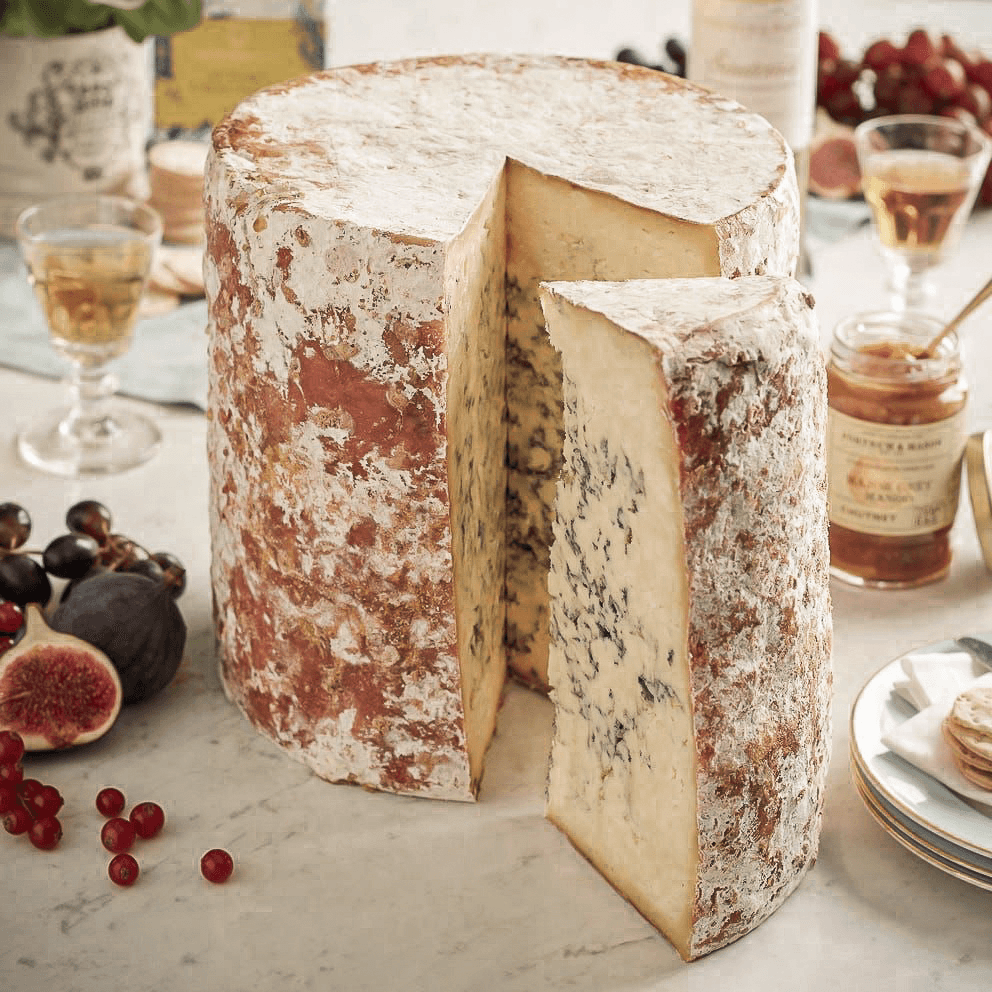
During our visit, we sample a piece of Silter, the flagship product and unique DOP of Valcamonica. Andrea has also been the president of the Silter Consortium for ten years, aiming to use the designation as a driving force for the entire food and wine tourism of the valley. Silter is made following the "grandparents' recipe," using only skimmed raw milk from Alpine Brown cows. I taste a more aged piece: closing my eyes, the mountain herbs and hay immediately emerge, with slight hints of butter and chestnut flour.
"Silter is good for a hundred days, but it is also good for ten years."
Next to the Silter forms, there is another very similar one: the Case di Viso, a creation by the same Bezzi. The idea comes from the desire not to deprive the cheese of a fundamental component: the cream. "If we think about scents and aromas, all this remains in the cream," explains Andrea. Hence the choice to use whole milk to create a richer and longer-lasting cheese. The Case di Viso is crafted raw with veal rennet and is naturally fattier than Silter. Some forms can reach up to fifteen years of aging.
"You would never guess his age from a 2010 Case di Viso. Never."
Other producers use the name for different cheeses – Tonale, Stelvio, Paghera – all valid products. But Andrea is categorical: when talking about Case di Viso, one must talk about Case di Viso by Andrea Bezzi. To protect consumers, his products always bear the full label "Case di Viso Bezzi". Between tastings, this time of an extraordinary Case di Viso with almost bitter notes, Andrea shares the everyday life of the alpine pasture.
Better fewer shapes, but made with the serenity of someone who knows why they continue to produce them.
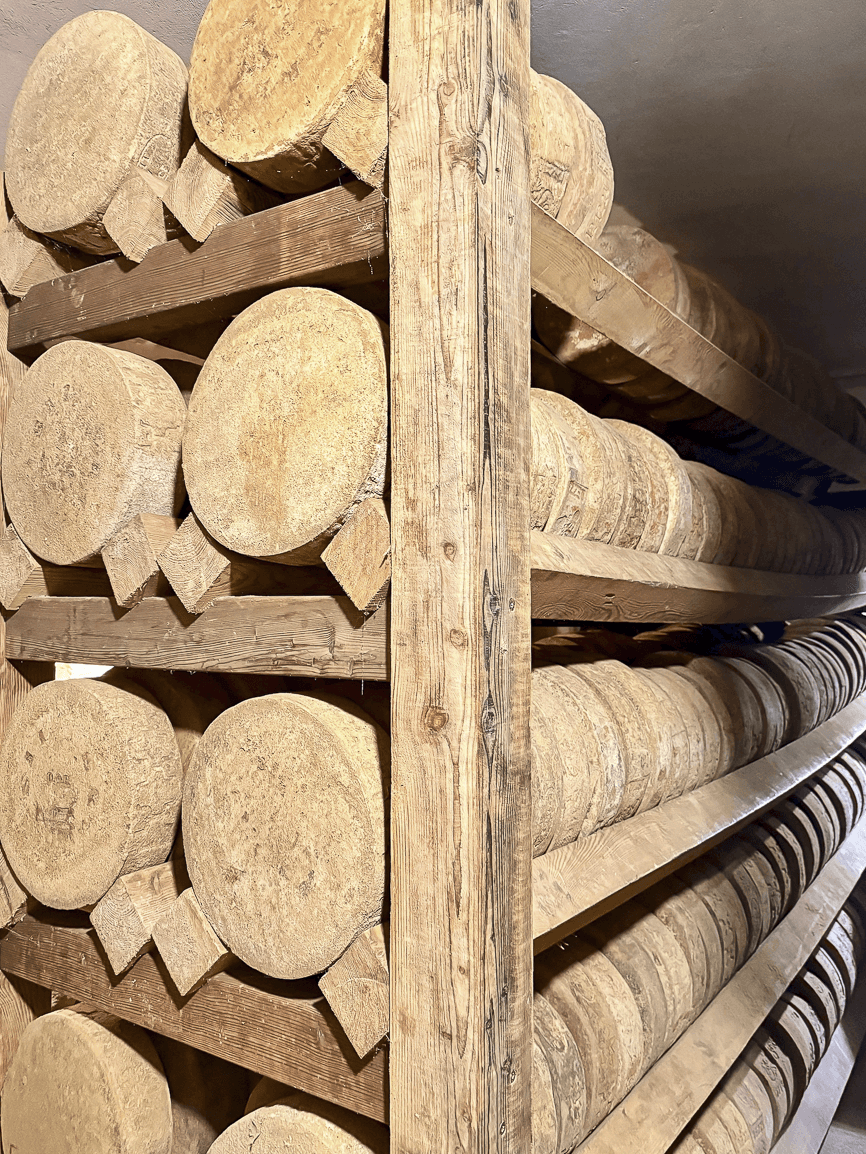
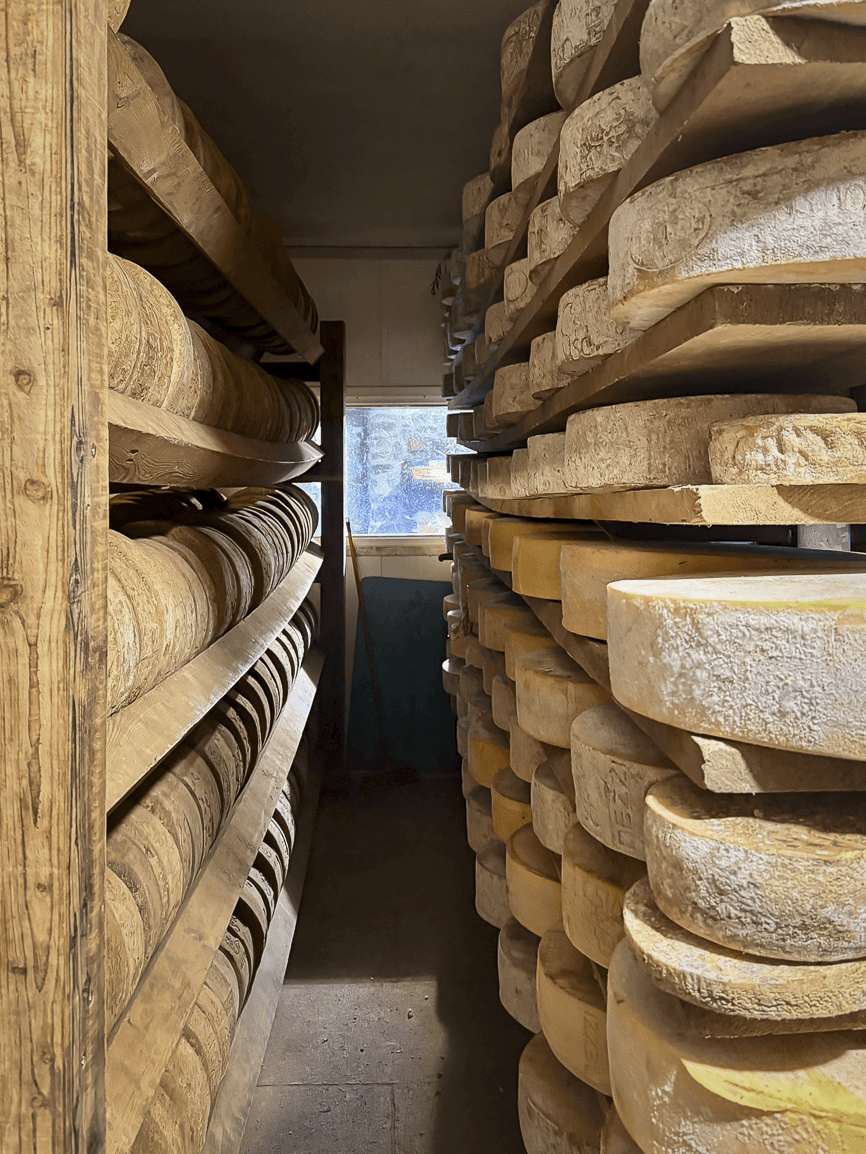
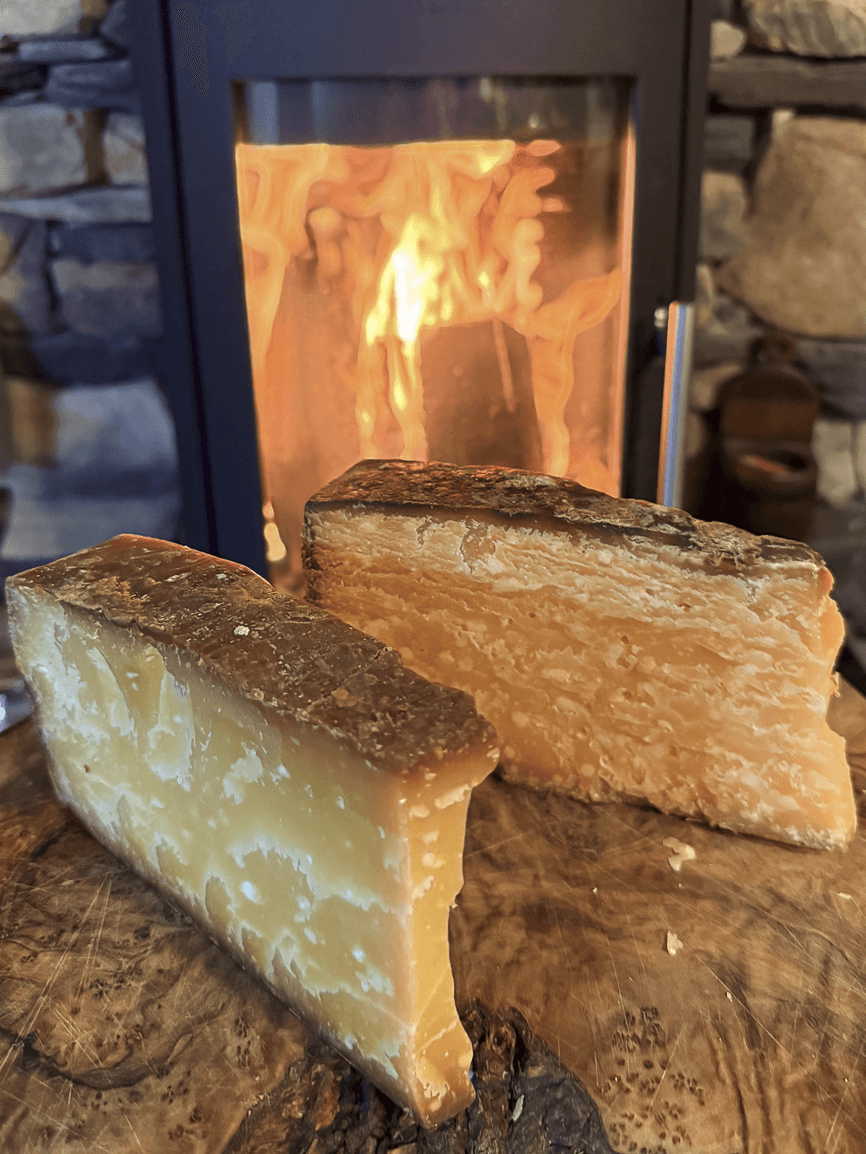
We visit the casera, the place where cheeses age slowly. The shelves reach up to the ceiling and are filled with wheels of Silter and Case di Viso. Here, the dedication, patience, and love that Andrea puts into his work can be clearly felt. Before we say goodbye, he suggests I try them together: according to him, Silter and Case di Viso reach their peak when used together in pizzoccheri. In the evening, at my home in Ponte di Legno, I can agree with him. In front of the stove, I prepare a cutting board with fifteen-year-old Case di Viso and ten-year-old Silter, accompanied by a glass of Valcamonica IGT red, born on the steep slopes of the valley.
The result is simple and perfect: probably the best pizzoccheri ever eaten. Cheers.