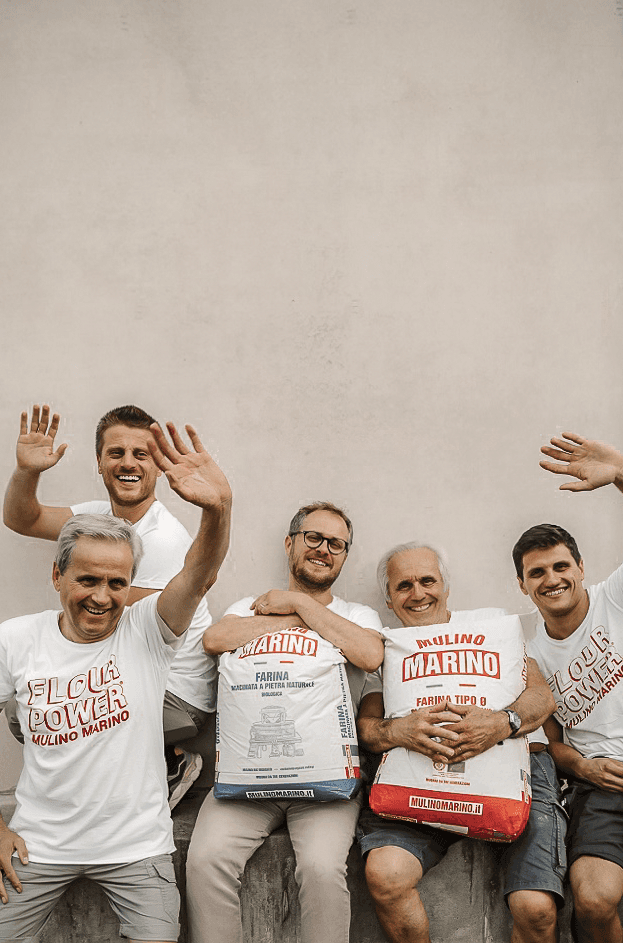
In the Langhe, where the land moves to the slow rhythm of the seasons and the scent of things done well fills the air, there is a family that has been working for seventy years with an invisible but essential ingredient: time. Mulino Marino was founded in 1956 at the instigation of Felice Marino, the founding father of a dynasty that seems written into destiny already in the names: Felice, Ferdinando, Flavio, Fausto, Fulvio, Federico. A tradition that is not only about family lineage, but is deeply cultural. Telling its story for Retrogusti is Flavio Marino, from the second generation, guardian of a knowledge that combines technique, memory, and vision, and who, together with his brother Ferdinando and their children, carries on the mill's work.
The history of the mill is an evolutionary path that spans the great transformations of milling: from stone grinding, to the transition to roller mills, and finally to a contemporary synthesis that looks to the future without forgetting the past. But it is precisely in the return to stone, strongly supported by Father Felice, that an identity-defining choice is made. Not nostalgia, but awareness: recovering a method means restoring complexity, aroma, and life to flour. A philosophy that reaches its fullest expression when the mill decides, among the first in Italy, to become “bio-dedicated.” A radical choice that was initially costly: “We worked on it one week a month,” Flavio tells us, but today it has become the beating heart of the company, its defining feature.
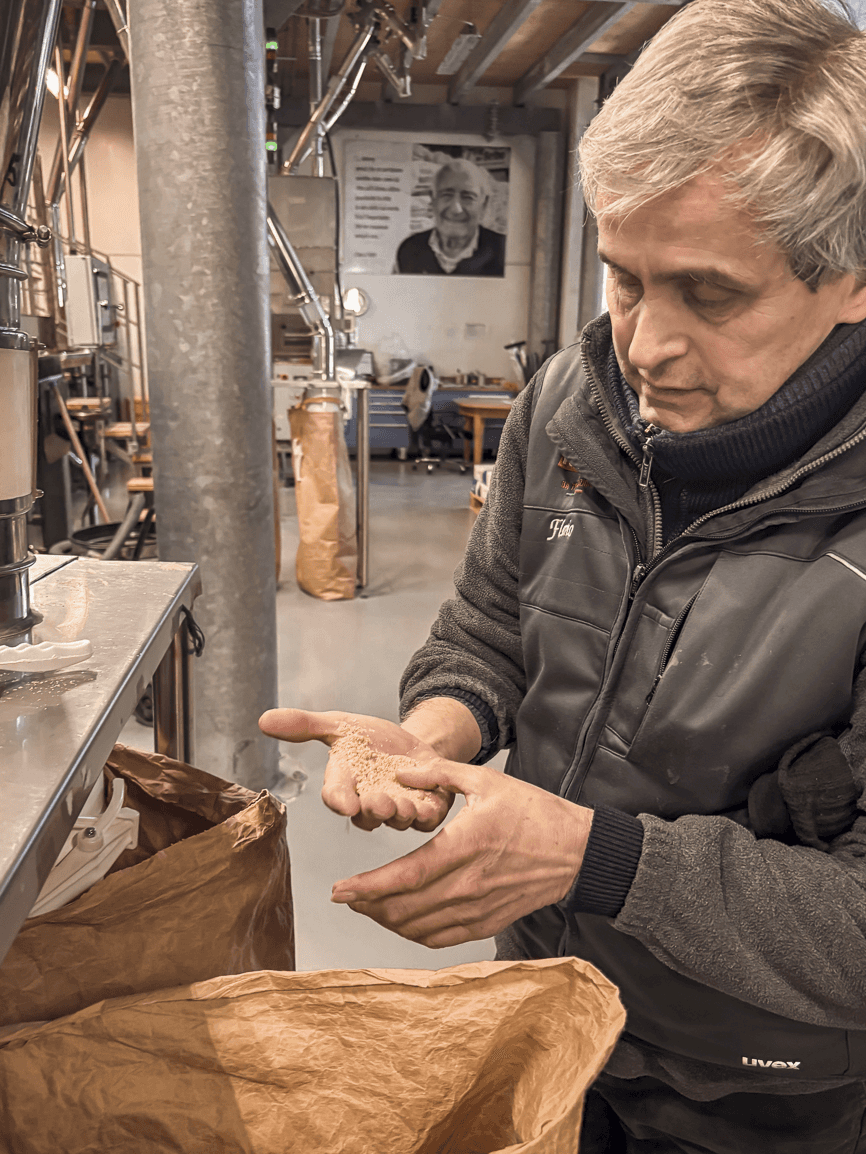
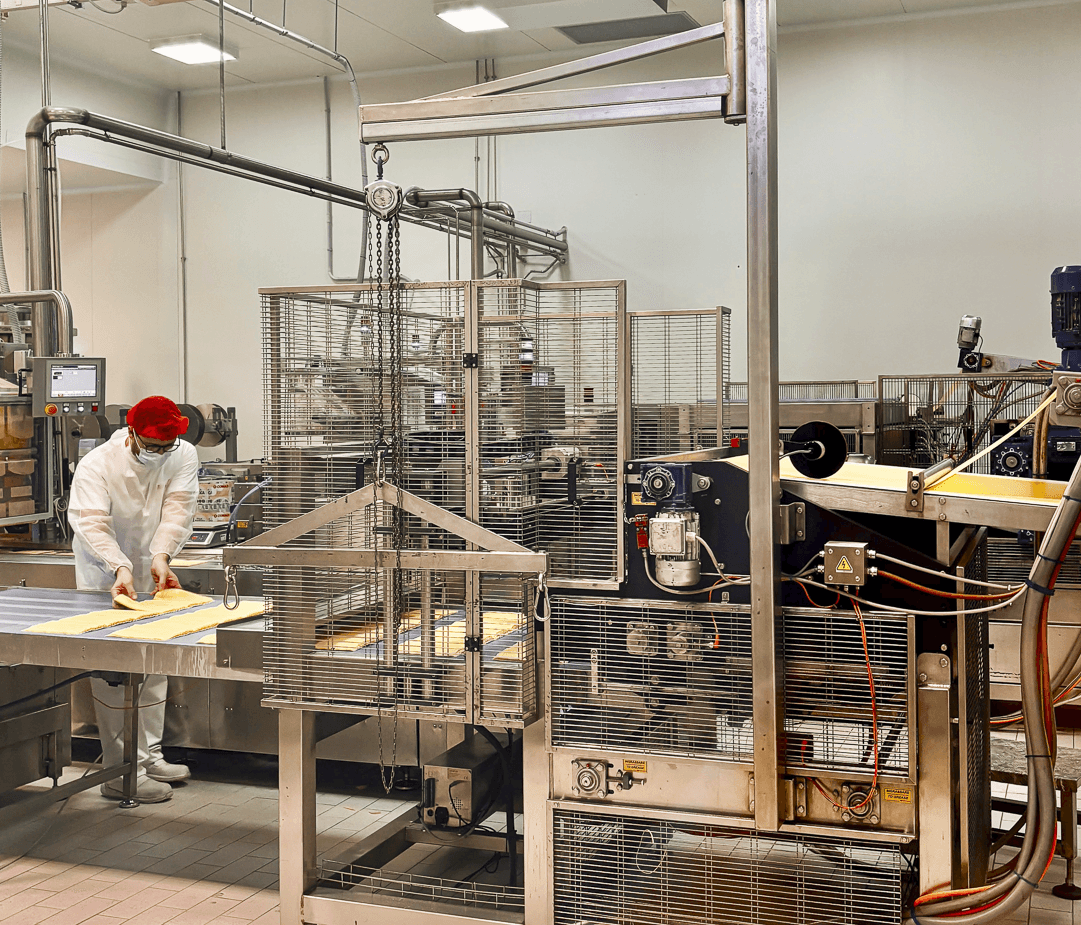
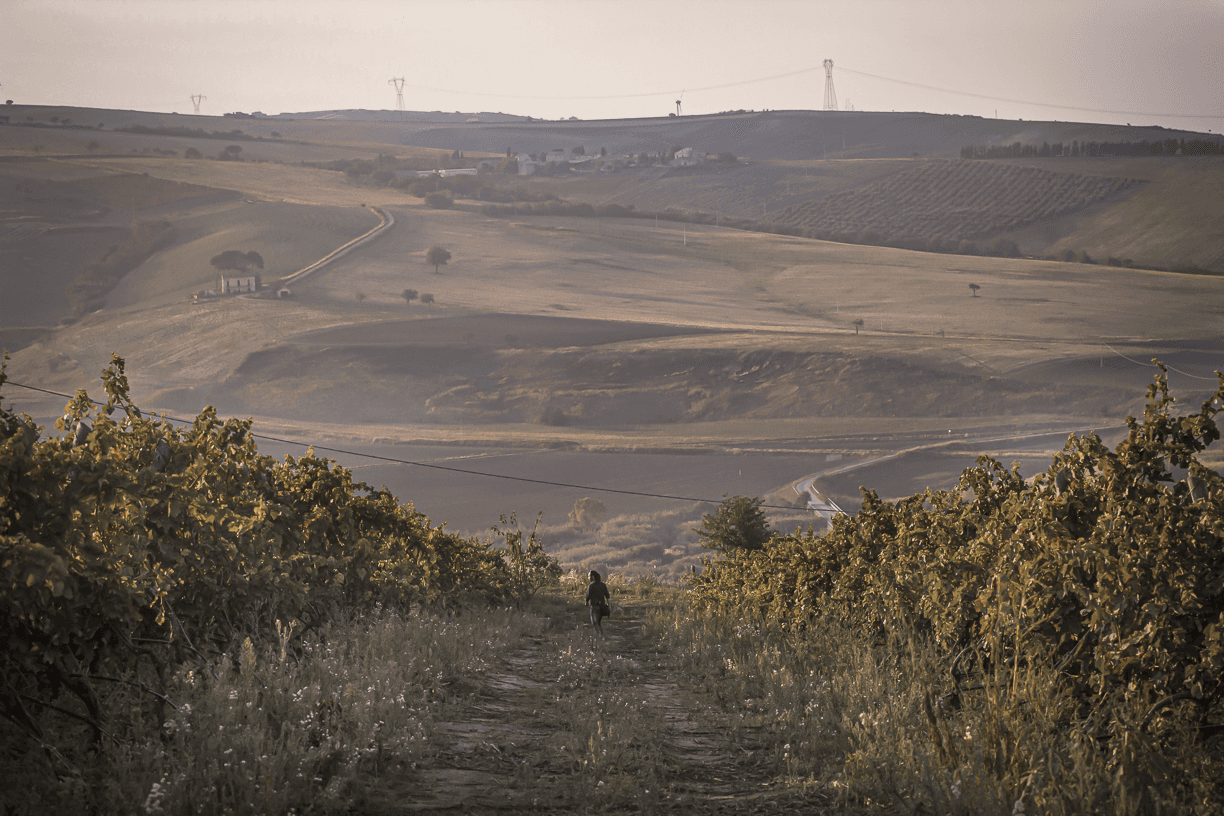
Among the company’s standouts is Enkir (Triticum monococcum), an ancient grain grown exclusively in Alta Langa thanks to a collaboration with a local cooperative that has lasted for over fifteen years. Two hundred hectares of land are devoted to a wheat that tells a different story: more digestible, more distinctive, more authentic. A product that is not just raw material, but an agricultural and cultural project. Processing takes place in separate environments to preserve its purity and ensure the absence of contamination. Such almost tailor-made care reflects the mill’s philosophy: every flour has its own soul and must be respected.
But if there is one factor that more than any other defines the quality of a flour, it is the resting time.
After milling, flour needs time to mature: between 30 and 40 days to fully express its qualities. And this is exactly where the biggest challenge emerges: “Market demands, production pace, and growing demand,” Flavio explains, “all push in the opposite direction. So sometimes the flour is sold before it has reached its perfect balance, but our commitment is daily, to ensure a product of the highest quality excellence.” An assessment that Mulino Marino faces with clarity, because the goal is clear: not to increase quantity, but to elevate quality.
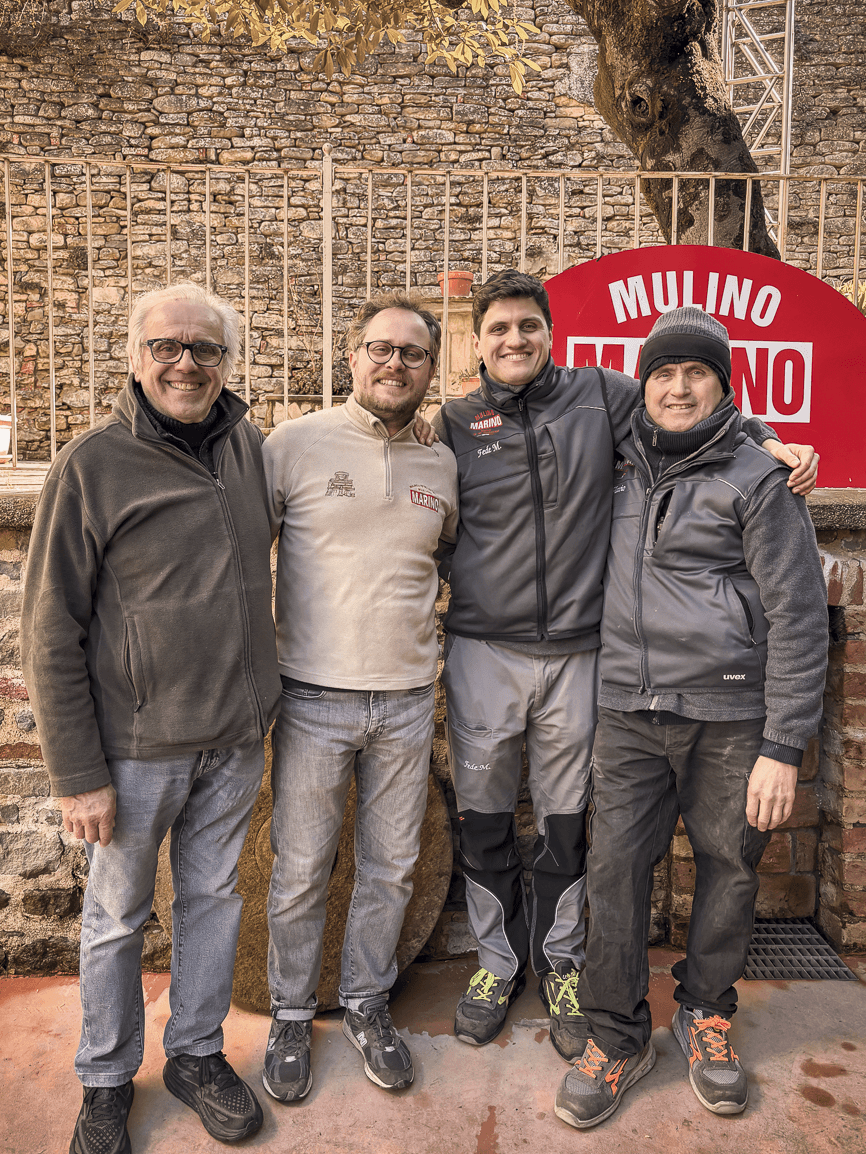
“The future of the mill will not come from industrialization, but from customization,” adds Flavio. The idea is as simple as it is revolutionary: to create tailor-made blends designed for the end customer. Already balanced flours, ready to use, capable of meeting specific needs. A product that is no longer just an ingredient, but a solution. Open the bag and pour it into the mixer: this phrase captures the entire direction being taken. Making life easier for bakers, pizza makers, and pastry chefs by offering concrete added value.
Alongside production, Mulino Marino is making a strong investment in training.
Bread-making, pizzeria, and large leavened dough courses: moments of exchange and growth that are enjoying ever greater success. Not just lessons, but experiences in which flour becomes a common language. Because promoting culture also means sharing knowledge, building skills, and creating a community. In an increasingly automated world, the human touch remains central. Flavio is one of the last to master the art of millstone dressing, an operation as complex as it is decisive. It is there, in the rhythmic sound of metal against stone, that the quality of the grinding is determined. An ancient craft that cannot be improvised.
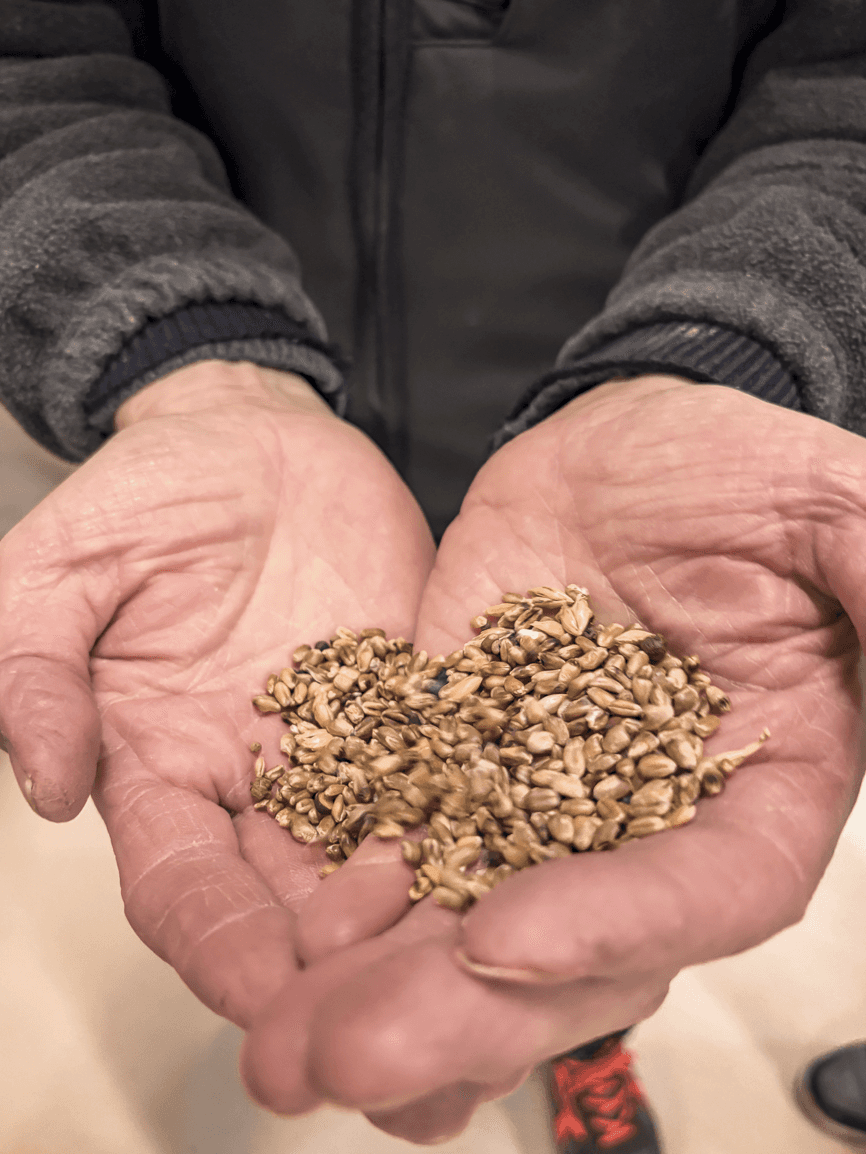
In a time that moves so fast, choosing to slow down, giving the flour its days of rest, listening to the stone, and nurturing relationships is almost a revolutionary act. If there is a common thread running through the whole story of Mulino Marino, it is the conscious choice of organic as a cultural act even before a productive one. Being a dedicated organic mill does not simply mean using certified raw materials, but building a system based on trust, transparency, and responsibility. It is a clear stance: knowing every step, every field, every farmer. This is where communication becomes an integral part of the product. “Telling the story of flour,” Flavio adds, “means telling the story of its journey, giving value to what often remains invisible. A traceable path from beginning to end, in which every phase, from cultivation to milling, is monitored, checked, and guaranteed.”
Today Il Mulino is preparing for the generational handover. Fausto, Fulvio, and Federico represent the continuity of a story that refuses to stop.
It is not just a handover, but a natural evolution, because each generation adds a piece without ever losing the thread. And it was Fulvio Marino who gave voice to this world, bringing flour out of the mill and into people’s homes. Through extensive communication work — through television appearances, outreach, and training — he has made the language of leavened dough accessible to everyone, turning technical gestures into shared culture.
Her books dedicated to bread, pizza, and large-leavened products are not simple recipe collections, but tools for passing on knowledge: a bridge between those who produce the flour and those who work it every day. In this approach lies the true contemporary challenge of the Marino Family: not only to produce quality, but to make it readable, recognizable, and shared. Because today, more than ever, the value of flour lies not only in how it behaves in dough, but in the story it is able to carry with it.