In collaboration with:
Slow Food Community for the Promotion of the Morciano Tomato
There are places that resonate, places that mend tears, that tell you a story and demand your attention. They are places that have always been home to you, but at a certain point they set the direction of your compass. My return to Salento after graduating in Rome coincided with a choice: to go back to the South and cultivate poetry in the land of my great-grandparents.
Agritourism farms are like a big family; they teach you the importance of waiting and of vision. As always happens in life, the people you meet matter—they are the ones who become beacons, who bring light to your journey. Meeting Giulio Sparascio, president of Turismo Verde, was fundamental for me. I owe him a large part of my return; from him I always borrow a phrase that is dear to me: agritourism farms are those places where a light is switched on in the countryside. And that is exactly how it is. We are the poets and dreamers who, in a clump of earth, cultivate a forest of hopes, all our family stories, tales of stones and roots.
Those who cultivate the land are not very different from those who write poetry: both listen to the silences of the world and try to give them a voice.
To read the stars and practice waiting, to live in the moment, to find a way to weather storms—and storms are always there, the only certainty we have. We try to mend the tears time leaves behind, and we do so by gathering from oblivion ancient practices and seeds that still stubbornly resist forgetfulness and the daily rush. So, at Sante Le Muse, my return coincided with a promise: to take up again the ancient Morciano tomato seed that my grandparents used to grow and try to give it a voice.
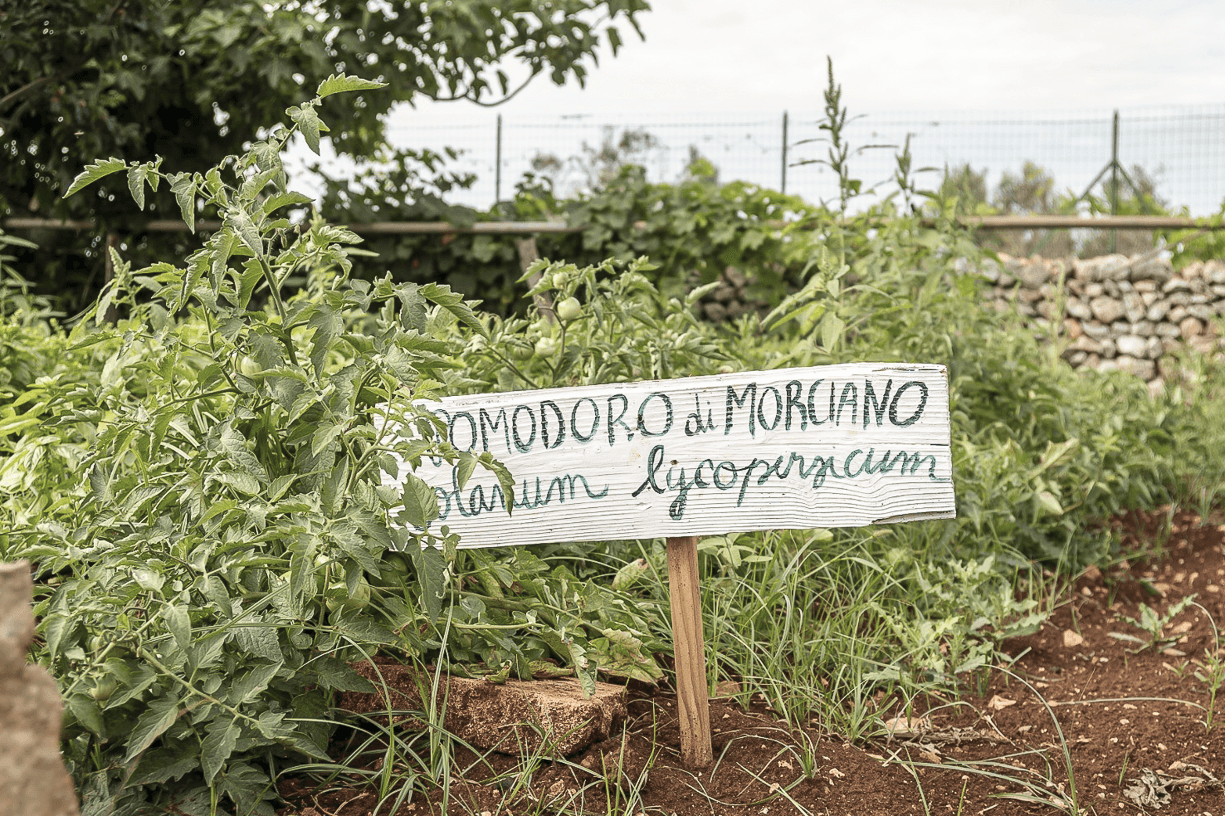
The Morciano Tomato is a product already included in the Ministry’s list of PATs. These were defined—by the legislation that established them (more than 25 years ago)—as “agri-food products obtained using processing, preservation, and aging methods that have been established over time for at least 25 years.” The monitoring and cataloging work was launched in the province of Lecce by the Chamber of Commerce in 2000, and since then nearly 200 identification records have been submitted. Today, the Apulia Region, which handles the review process and forwards the validated records to the competent Ministry, has counted 414 of them.
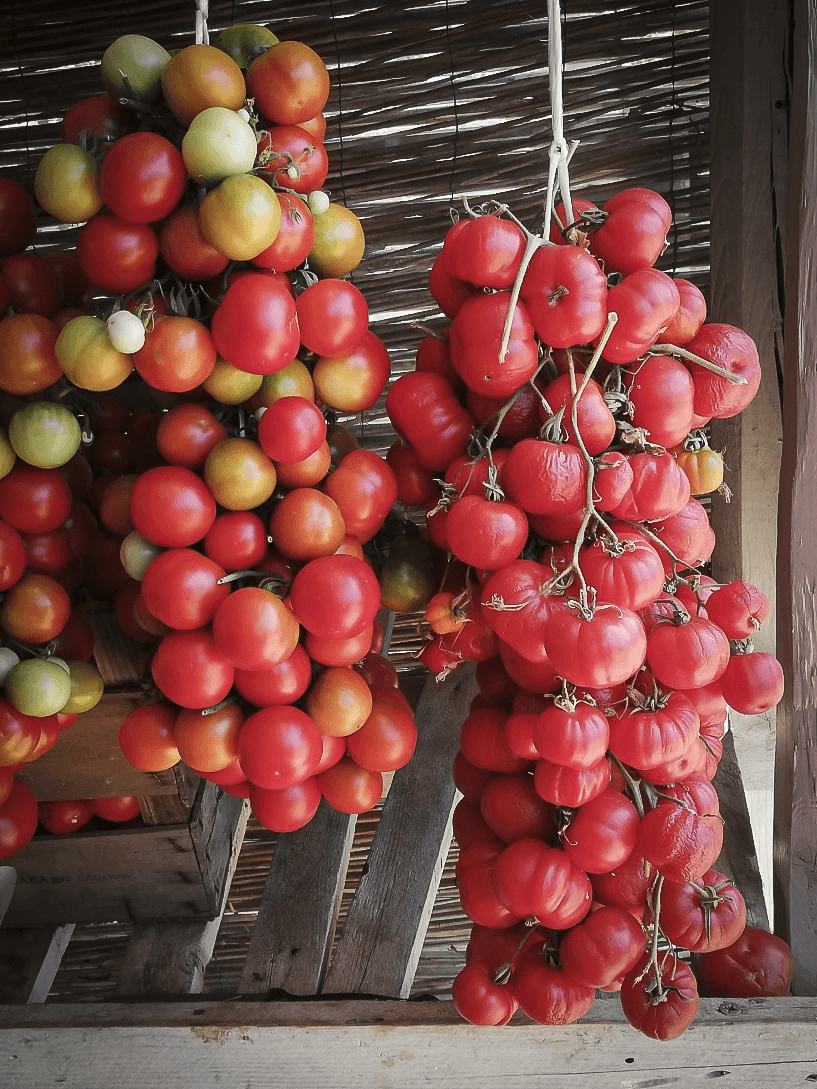
The Morciano Tomato is a cultivar with a history behind it, a story passed from hand to hand, surviving through time and the seasons. It is not just a tomato; it is much more—it is the history of an entire territory, which thanks to that harvest was able to sustain its economy. Since then, a small magic has taken place: a slow time marked by the changing seasons of the countryside, and within its folds someone still tends those seeds.
The cultivation of Morciano tomatoes is made up of rituals that have been repeated unchanged for generations.
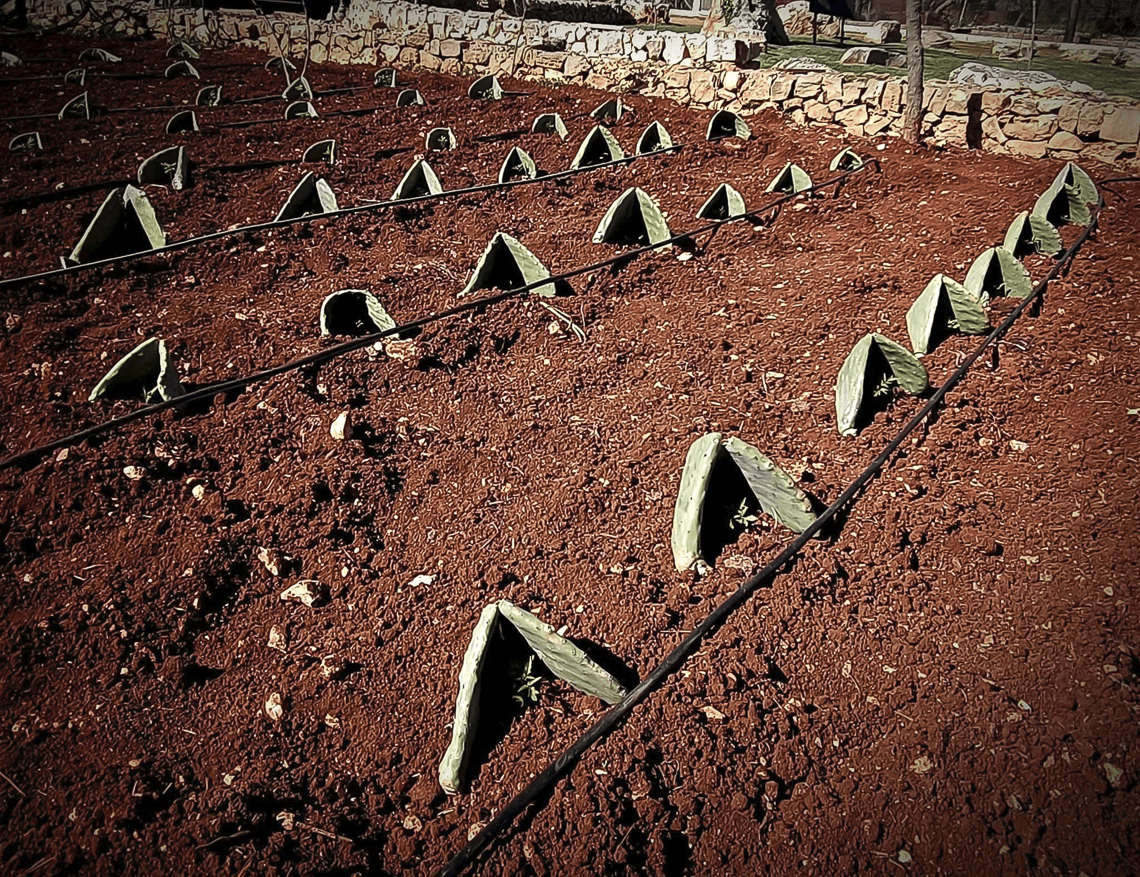
Glass jars with the precious seeds only saw the light at the beginning of December, when the seedbeds were prepared, a cradle of warm, welcoming earth. Then they waited until February to place the young tomato plants in the first field, but this is still a cold month that needs attention and care, and anyone who grows crops knows it. So, for each plant, a shield was prepared, a romantic suit of armor. Prickly pear pads were perfect for the purpose: they were cut and placed halfway underground, at just the right depth to later become a source of hydration and mineral salts. Once the plant had grown stronger, the pad was broken into pieces and mixed into the soil.
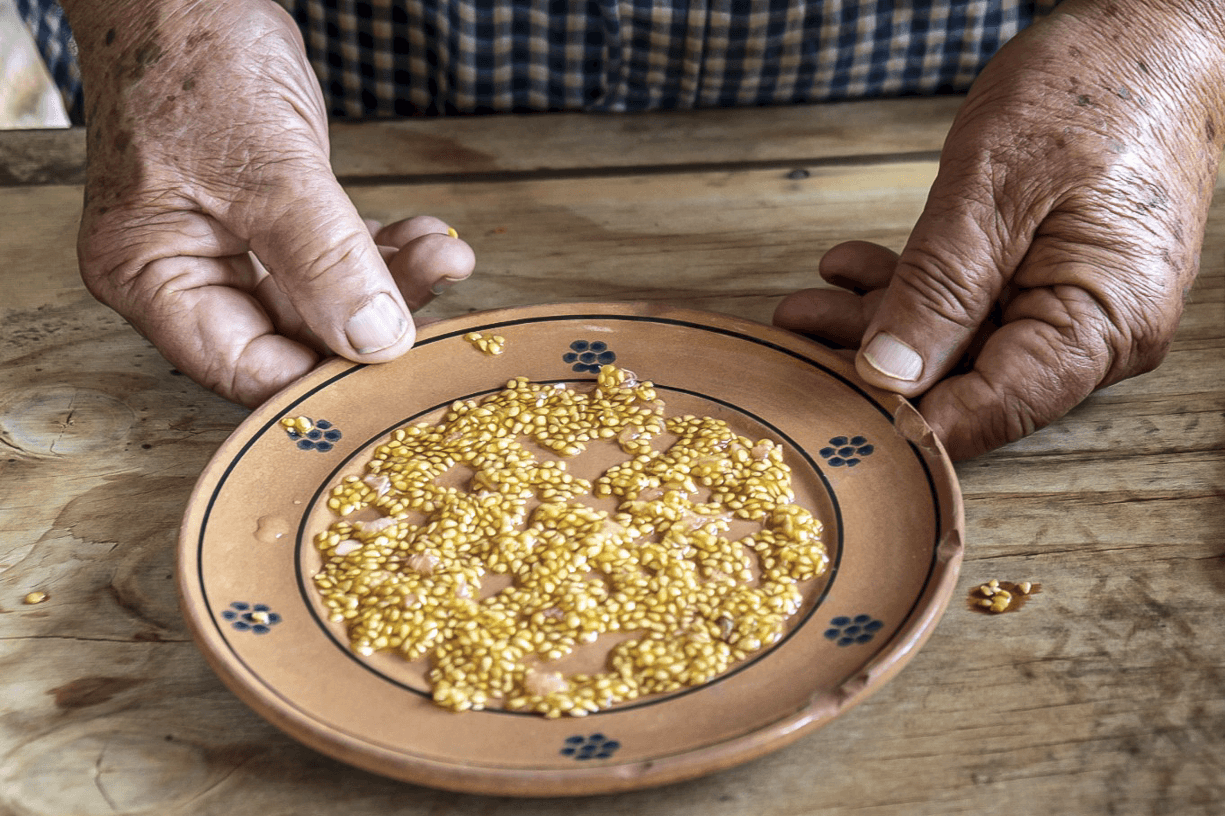
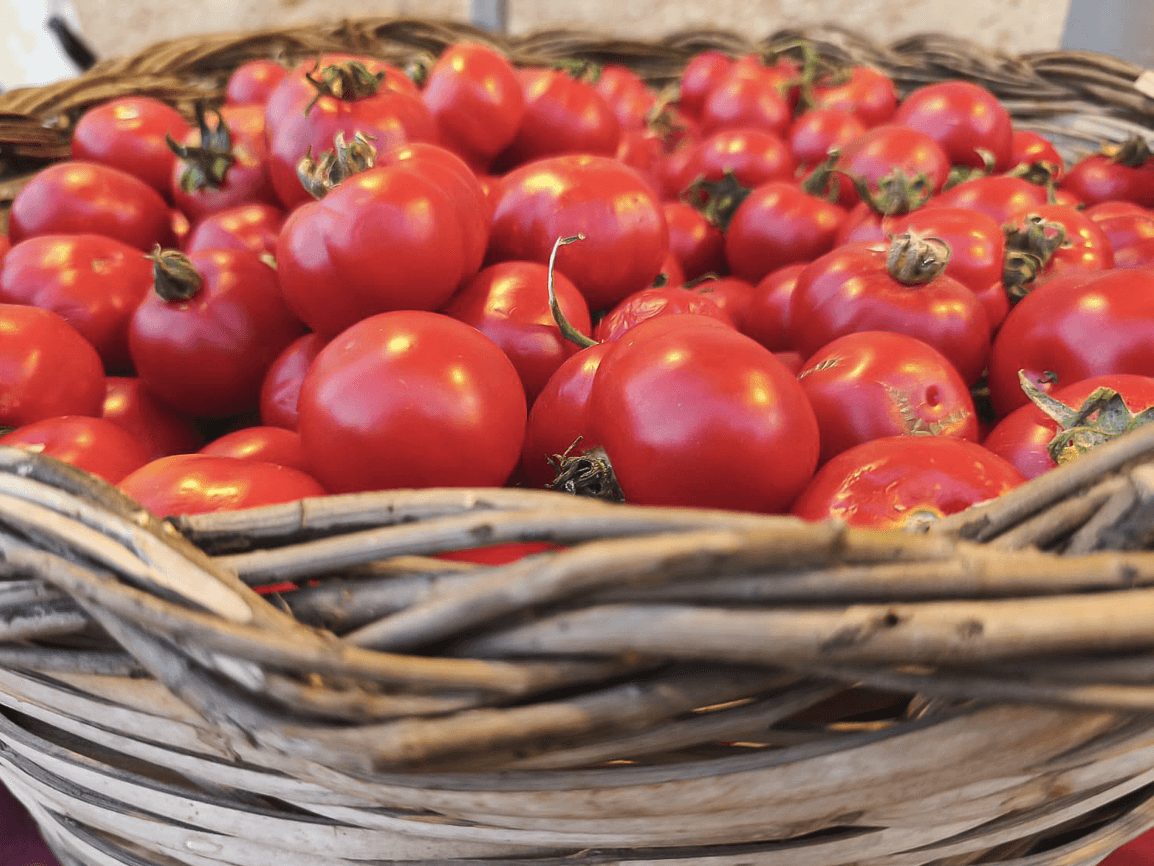
The Morciano tomato does not like water, except for the first watering, the one set aside for transplanting, when the seedlings are planted in open ground. And so, by May, one could harvest the long-awaited fruits, those early tomatoes that ripened before the others, flat and ribbed, with such a thin skin and such juicy flesh. Since then, every year the same magic is performed, the same ritual, by the very few who still grow it. At Sante Le Muse we have never stopped growing it; even today we carry out that ancient ritual in the same way, because the story of a place is told through gestures, in the shades of memory that bind presence to absence. It is gestures that keep alive what has been forgotten.
Sante Le Muse has been the custodian of the Morciano tomato since 2013–14, thanks to the “Biodiverso” project, carried out in collaboration with DISTEBA of Lecce and Bari, University of Salento. Even then, we tried to find someone else willing to accompany us on this evocative journey. But the time was probably not right; we found no one. The years went by and we continued to produce our Morciano tomato with the attention and care one would give to a family member, yet deep down we felt the need to find a way to become plural, because in diversity we have always seen added value; a free territory is born from plurality and diversity. It is a bit like a field: the higher the biodiversity, the better that territory will withstand the elements, the stronger it will be in facing them, because when there are many of us, we are less fragile, and we help one another.
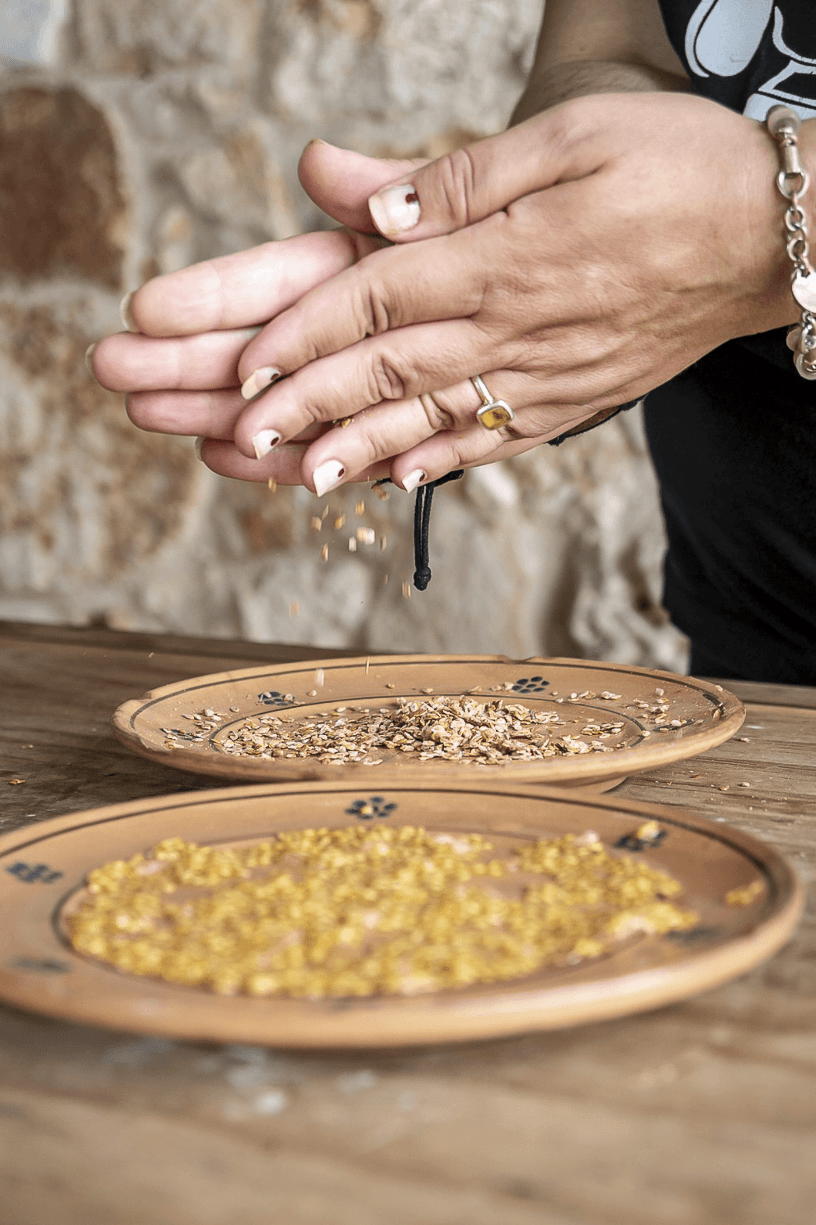
We wanted to share the seed we are entrusted with, but we also felt the responsibility to do so with a group of people who would walk in the same direction as we do, with the same horizon clearly in view. Then, in 2023, I met Sergio Longo, president of the Slow Food chapter in Lecce. Once again, encounters become essential. Slow Food allowed me to give shape to an idea: to create a group of producers who could walk together and write the story of that small seed.
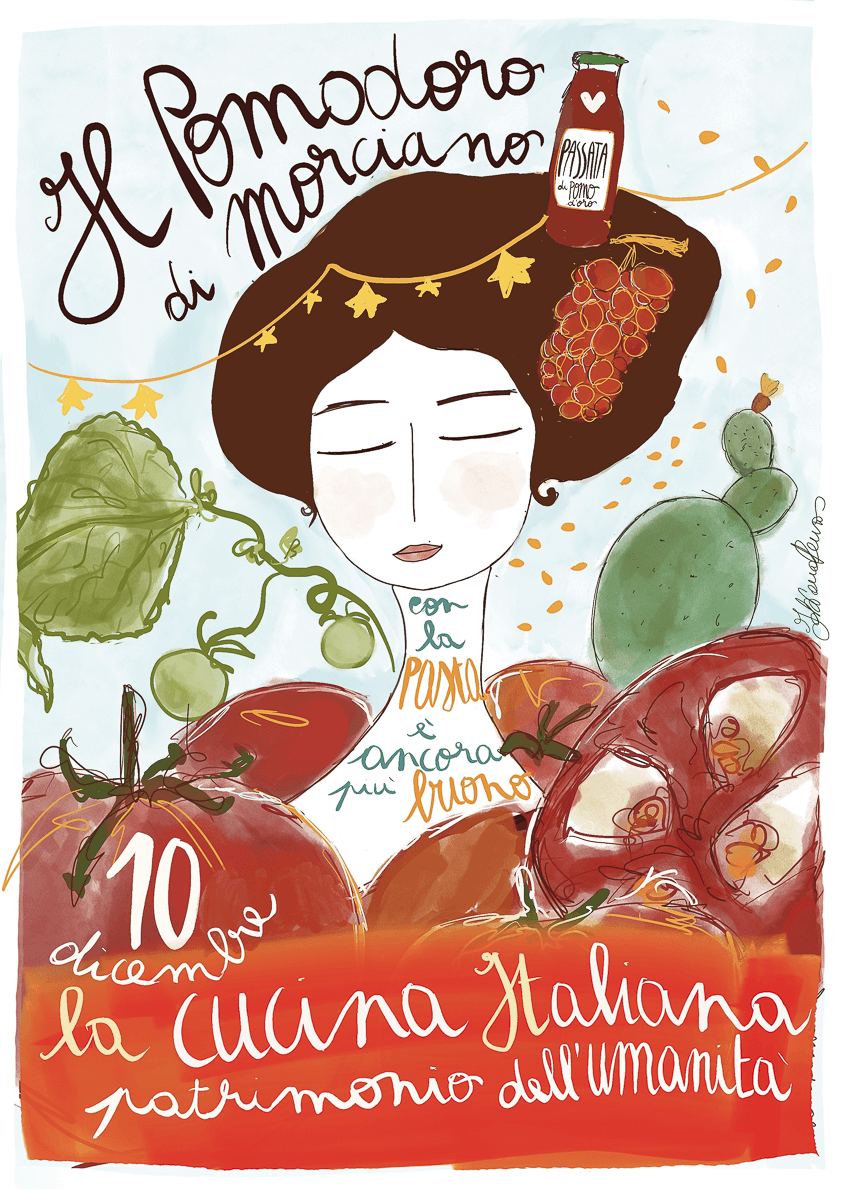
And so this little great community adventure was born: the Slow Food Community for Promoting the Morciano Tomato was founded in 2023. We are different people: some run a business, some are parish priests, some are psychiatrists, some are mayors, some are retired, and some study agricultural sciences. A diverse group of people united by the desire to walk together. Those who have been growing for longer help those who are younger and have less experience. My company, Sante Le Muse, guardian of the Morciano tomato, has shared part of its seed completely free of charge with the other aspiring producers, also providing the growing guidelines, so as to help those taking on farming for the first time.
The community does this: it leaves no one behind.
Since then, as the Slow Food community of the Morciano Tomato, we have not only cultivated our tomato but also shared our know-how. Last summer we managed to organize the Ethical Food Festival: for the first time, we produced our tomato purée, told the story of our small, incredible steps that connect our memory to the future of this area, visited schools, organized workshops and conferences, and produced and distributed the illustrated Morciano Tomato planner free of charge thanks to funding from the PNRR Borghi grant.
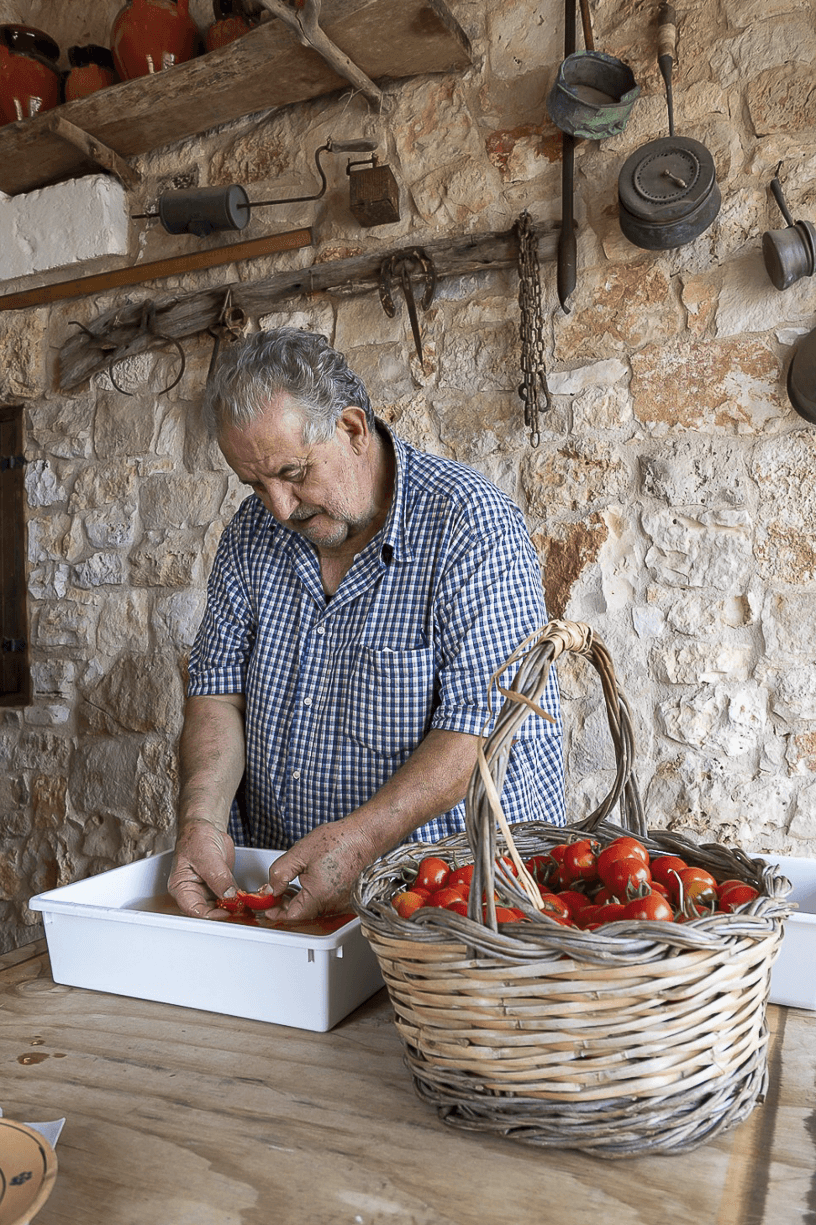
The Slow Food community for the Morciano tomato is a small step—the first, the right one—toward creating a Slow Food presidio. The Morciano tomato, like all PAT products, has a story to tell. In that seed, we see not only a tomato, nor just a place; in that seed there is my grandfather, there are all our grandfathers, their memory, those roots that must be preserved and renewed in order to carry on through and tell the story of new seasons.