During a Tuscan wine event, I had firmly intended to do a tasting tour of red wines, but as I moved among the booths of a well-known winery I knew well for the excellent Sangiovese it produces, I came across a white wine that sparked my curiosity.
The label bore an evocative dedication from the producer for his daughter’s eighteenth birthday. Anyone who makes wine is always performing an act of love: the work in the vineyard, the wait for the harvest — a Leopardi-esque extreme of Il sabato del villaggio —, the virtuous anxieties during fermentation and so on throughout the journey from grape to glass.
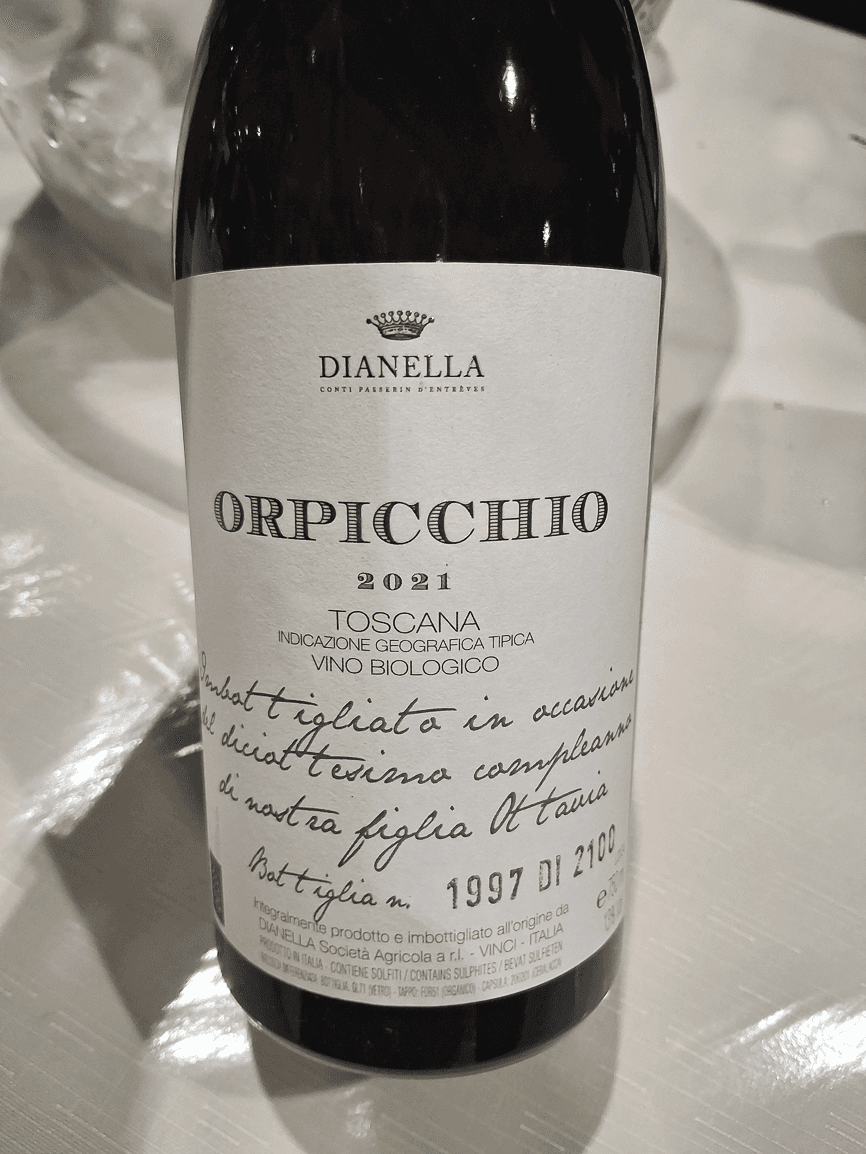
My eye immediately fell on the unfamiliar name: Orpicchio. Curiosity took over and, as I felt it glide over my taste buds, I was pleasantly captivated. The freshness it came with transformed into a refined, lingering elegance. In a single word: delicious. A purely accidental discovery, just like its story.
It was smooth and opened with a richness of aromas of ripe fruit, peach, and apricot.
The Conti Passerin d’Entrèves, owners of the vineyards, at the time of the purchase and thanks to the appointed oenologist, noticed during the restoration of the rows that some plants showed characteristics different from their own Trebbiano Toscano. Further investigations followed with genetic DNA analysis and et voilà: they were faced with an ancient grape variety already known and mentioned by Leonardo da Vinci, who was a resident of those areas.
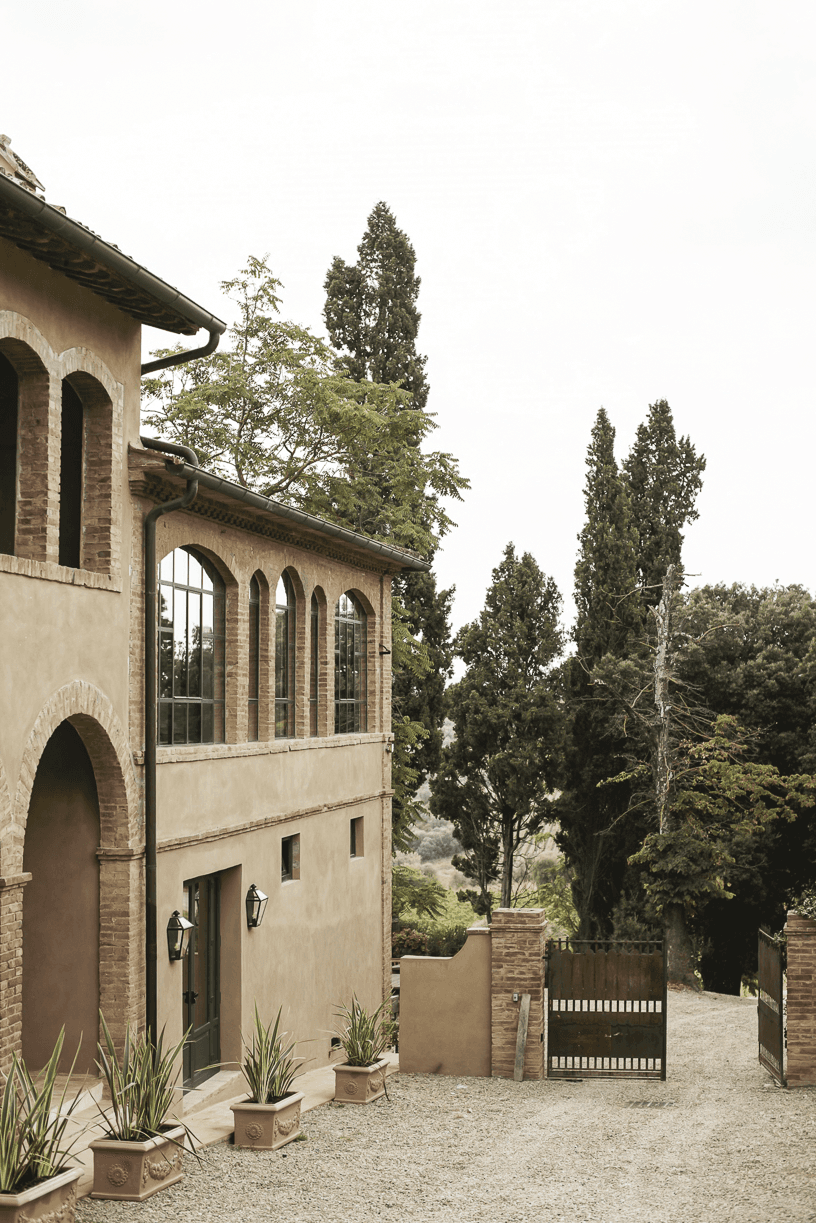
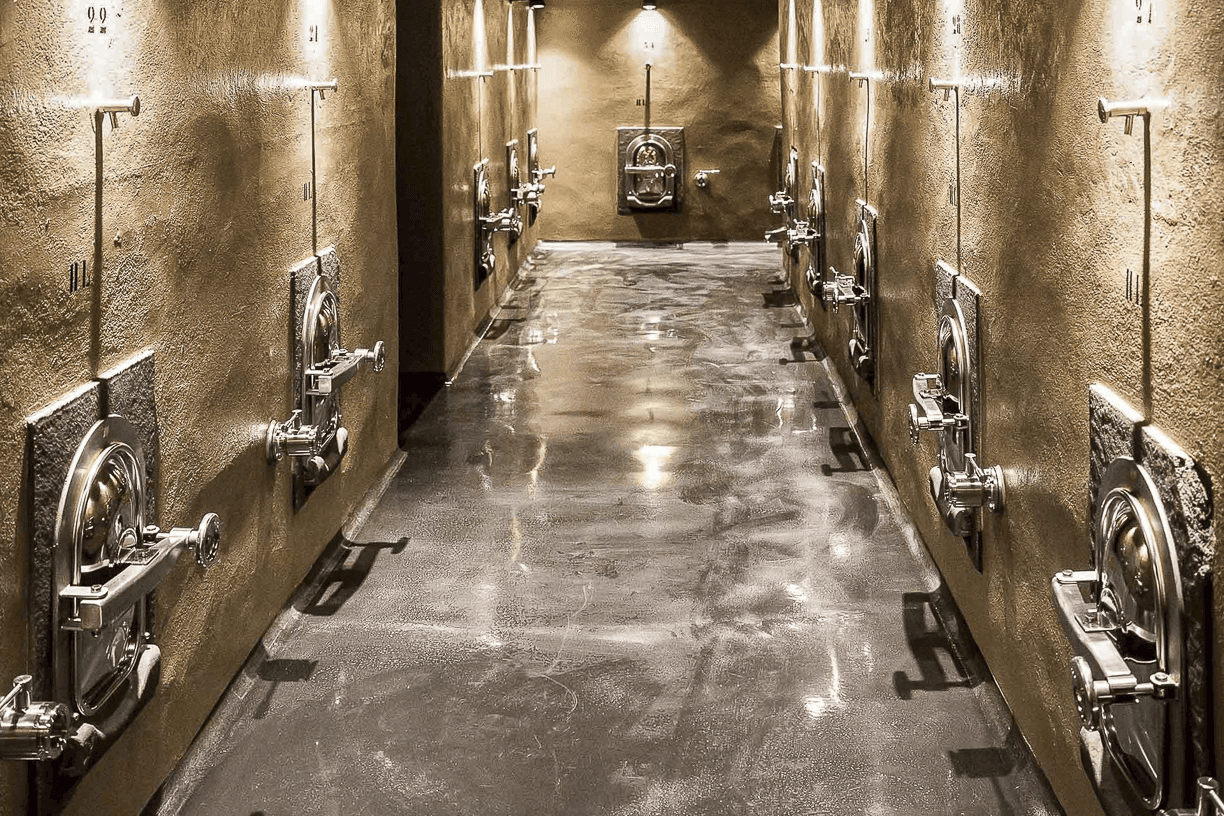
We are in Vinci, at a farmhouse—formerly a Medici hunting lodge—called Dianella, a diminutive in honor of Diana, the goddess of hunting, and today also the name of the winery that produces Orpicchio.
This is a biotype of Trebbiano Toscano that remained anonymous for centuries and is now finally recognized.
Its special quality does not end with its origin; it begins with its natural aptitude for longevity. White wines, especially Trebbiano, are generally not long-lived, but meant to be enjoyed young. Well, the one tasted was a 2021, and it is one of those sips you do not easily forget. Time, a great ally in enriching wines with aromas and bouquet, has hidden and preserved a small oenological gem that, thanks to the expertise of those who love what they do, we can now enjoy.