

The earliest records of smoked salmon date back thousands of years, when certain populations used the smoking process as a way to preserve fish for long periods. This practice, born out of necessity, has slowly transformed salmon into a delicacy, loved around the world for its rich and distinctive flavor.
Salmon has always played a central role in the cultures of the Nordic regions
especially among the indigenous peoples of Scandinavia and those of the northeastern coast of North America. Their proximity to abundant waterways teeming with salmon allowed for the development of fishing and fish-preservation techniques, including smoking. Further south, the Celts were masters of the art of smoking fish and used this technique not only as a method of preservation but also to enhance its flavor. Smoked fish was considered a prized food and a symbol of wisdom and knowledge. Later, the practice of smoking fish spread to Russia and Poland as well, where the technique was refined and became a common practice.
The smoking process helps prevent the growth of bacteria responsible for spoilage and extends the shelf life of the fish, making it an essential food during the winter months.
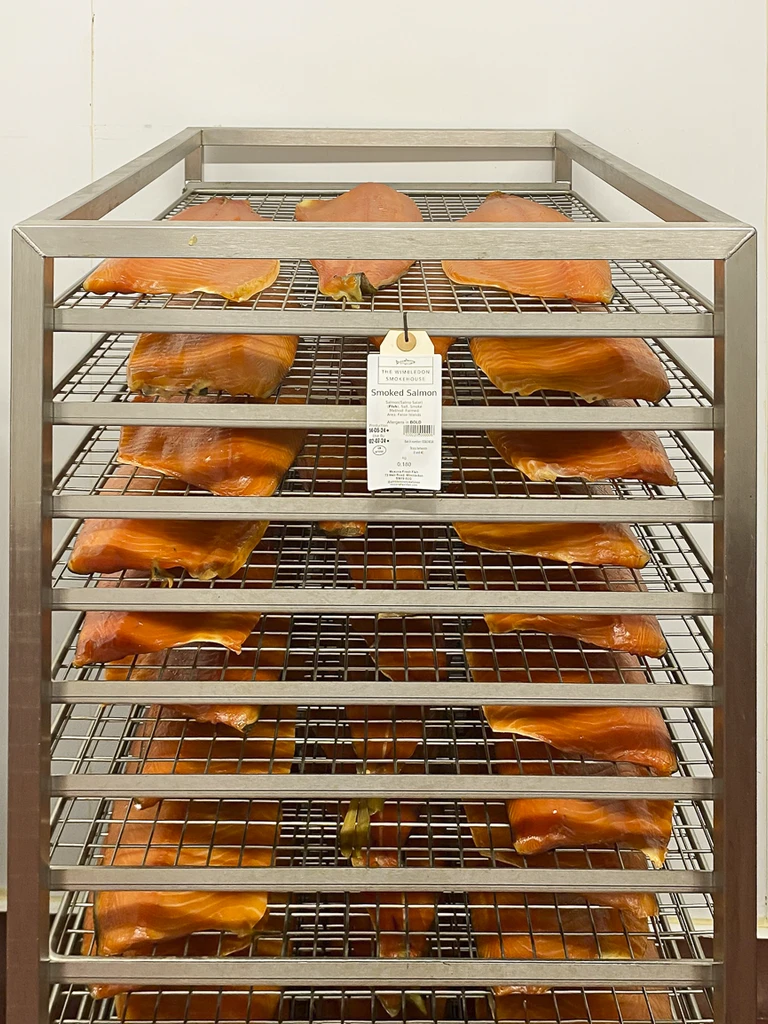
In addition to preserving the fish for longer, smoking gives salmon a richer, smoky flavor that is highly prized. Salmon prepared in this way quickly became a delicacy, with a unique flavor and texture that cannot be achieved through other preparation methods.
Smoked salmon arrived in the United Kingdom with the immigration of Eastern European Jews fleeing persecution in the early 19th century. They settled in the East End of London, an area marked by high levels of immigration and poverty. Smoked salmon was called “Lax,” from the Yiddish word for salmon, but this product was a far cry from the smoked salmon we know today. At first, it was a product used only for personal consumption in London’s Jewish and working-class neighborhoods. Gradually, it began to be sold to locals as more Londoners developed a taste for it.
The salmon arrived from the Baltic Sea in barrels filled with saltwater
—essentially a brine solution—and was then smoked in sheds in people’s gardens. The smoked salmon eventually made its way to London’s Billingsgate Fish Market. And at this point, a significant change took place: fresh, cold-water Scottish salmon replaced the Baltic variety because it was available fresh every day. This shift in raw materials changed the course of history. Fresh Scottish salmon, among the best in the world, took smoked salmon to a whole new level and made it uniquely British.
In addition to the superior quality of the fish itself,
its freshness made it possible to replace the wet brine used with the Baltic variety with a dry brine
—salt could now be added dry, resulting in a firmer, meatier fish rather than the soft and often slimy texture of its predecessor. Furthermore, the fat marbling and density of the Scottish fish’s flesh make it better suited for smoking. The fat traps the smoke, but the density of the flesh prevents it from penetrating too deeply and promotes a very concentrated flavor and texture in the final product.
In the 1920s, this fantastic product was discovered by London’s elite through Harrods and The Savoy Hotel. Just as many other delicacies have come to be, smoked salmon transformed from a staple food into a luxury item.
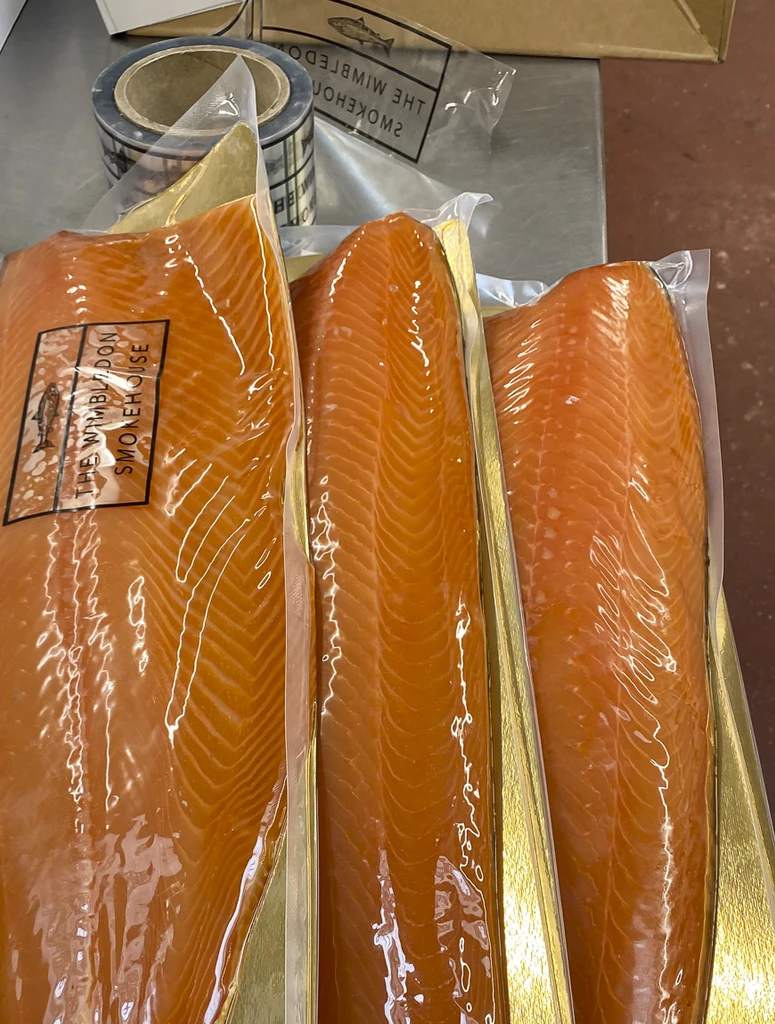
There are two very different methods for preparing smoked salmon: cold smoking and hot smoking, but I much prefer cold smoking because it doesn’t cook the fish, resulting in a delicate texture that preserves the sweet and creamy flavors of the raw fish.
In London, there are still only a few smokehouses that produce high-quality smoked salmon. One of these is Wimbledon Smoke House. Run by a multi-generational fishmonger, Moxon’s recently opened this smokehouse to create a high-quality product using the finest fish and making the most of both traditional and modern techniques.
To achieve the best result, the most important factor is the raw material: the salmon. The salmon arrives fresh daily from Scotland, from a small-scale farm that prioritizes high fish welfare standards and minimizes environmental impact. The other key ingredient, besides the smoke, is salt: they use sea salt harvested in Portugal.
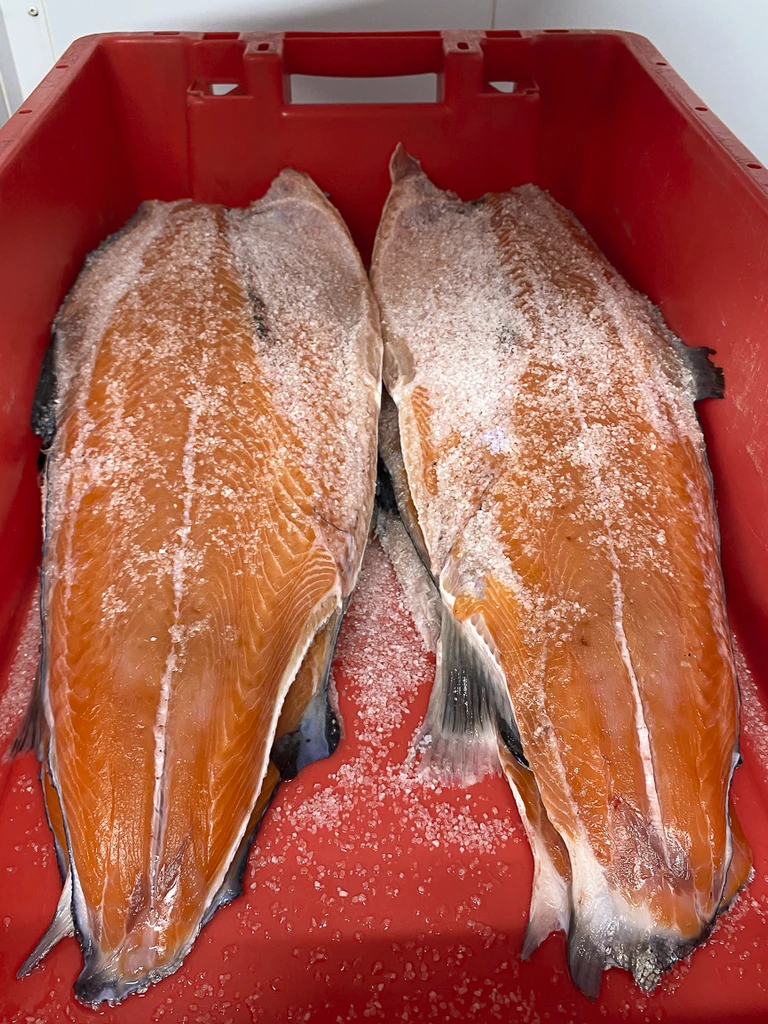
The fish is first filleted, leaving the bones in place; these are removed only after the fish has been smoked. This prevents the smoke from penetrating too deeply. The fish is then ready for the next step: dry salting. Salt serves two main purposes: first, to preserve, and second, to season. Timing is crucial, as excessive salting can make the final product too salty and too dry. After salting, the fish is rinsed and air-dried. The salmon is now ready to be smoked.
The type of wood used is very important.
In Scotland, salmon is usually smoked with oak wood and bark
The Wimbledon Smokehouse uses different types of wood: beech wood and fruit woods such as cherry. The exact blend is kept secret, as this ingredient imparts a distinctive flavor that varies depending on the smokehouse. Cold smoking takes place at temperatures between 20 and 30°C for 6–12 hours: the outer layer of the flesh remains tender, which is essential for achieving optimal results.
After spending the necessary time in the smokehouse, the smoked salmon is allowed to cool and develop its characteristic glossy finish. This is also an opportunity for the meat to continue absorbing and assimilating the flavors derived from the salting, drying, and smoking processes. After all these meticulous steps, the salmon is ready to be sliced and packaged. At the Wimbledon Smokehouse, most of the preparation is still done by hand, including the manual removal of the rib cage—which was left attached for smoking—to avoid damaging the delicate flesh.
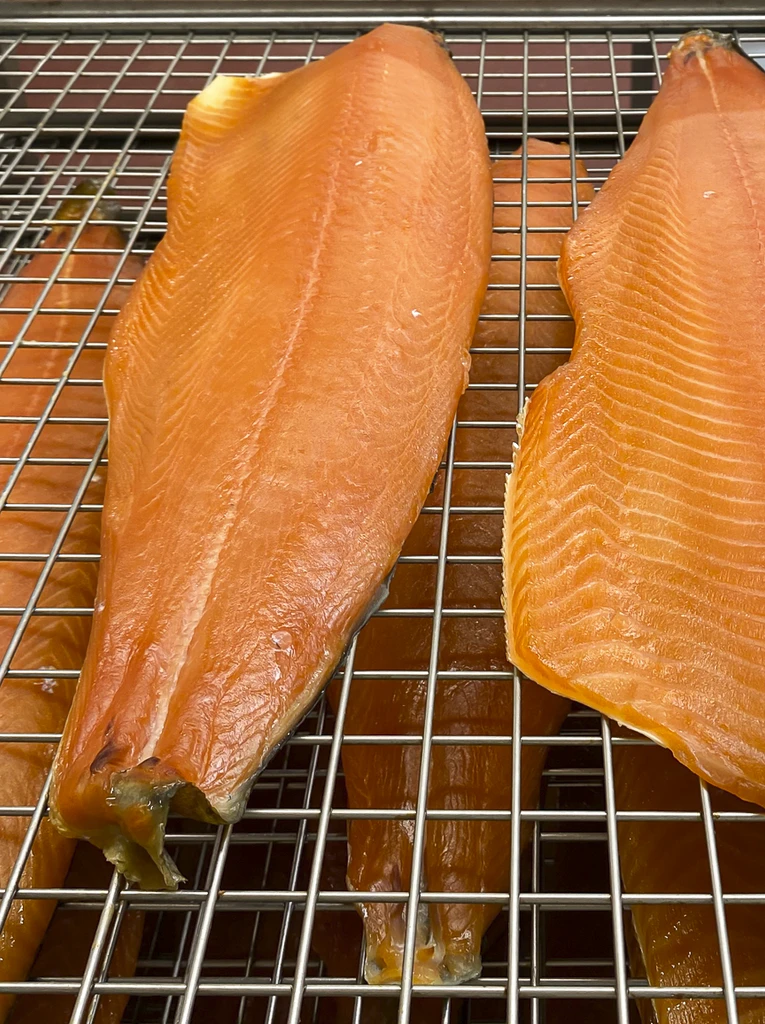
Once ready, the salmon is sliced. This can be done traditionally along the “long side,” slicing the salmon into a long, thin slice, or with a “D-cut,” slicing the fish across the wide side at a 45-degree angle to achieve the traditional “D” shape. It is then packaged and delivered to London’s finest restaurants and delicatessens or directly to the homes of the most discerning customers.
Smoked salmon is a very versatile ingredient
It’s usually served on special occasions but also for breakfast—under an egg in Eggs Benedict Royal, on a bagel with a generous spoonful of cream cheese, or perhaps turned into a perfect pâté to enjoy with crusty bread or crudités.
Here’s a simple recipe for a delicious canapé or appetizer that you can make in just a few minutes:
Smoked Salmon Pâté:
- 300 g smoked salmon
- 150 g cream cheese
- 100 g crème fraîche
- Juice and zest of 1 lemon
- 2 tablespoons each of chopped dill, parsley, and chives
- 1 tablespoon horseradish cream
- Salt and pepper to taste
Instructions
Cut the smoked salmon into smaller pieces and place it in a food processor.
Add the cream cheese and crème fraîche and blend for a few seconds.
Add the lemon and horseradish and continue blending until smooth.
Transfer the mixture to a bowl, add the herbs, and season with salt and black pepper.
Serve in small individual ramekins or in the center of a platter surrounded by fresh seasonal vegetables.