

In January, forced Yorkshire rhubarb sprouts with its scarlet-pink stalks, adding a splash of color to our table. This vegetable, often considered more of a fruit because of its culinary uses, is native to Asia, likely to the cold regions of Siberia. It was already known in Roman times under the name Rheum Rhabarbarum or “foreigner from the Rhine,” the river that once divided the Roman Empire from the “barbarian” lands. It was brought to Europe via the Silk Road, and trade began in earnest due to the medicinal properties of its roots, which contain oxalic acid.

Although poisonous, the powder obtained from the roots was used in small quantities to treat intestinal, liver, and lung disorders. It arrived in England in 1600 for medicinal use, but beginning in the early 1800s, its stalks began to appear in recipes such as pies, crumbles, and syrups. Despite its history and charm, it was not until 2010 that “Yorkshire Forced Rhubarb” received Protected Designation of Origin status from the European Commission.
“Before World War II, the United Kingdom produced 90% of the rhubarb sold worldwide.”
Then came rationing, and with sugar in short supply, its culinary use ceased. With the arrival of more exotic fruits in the 1960s, rhubarb slowly became a forgotten product. There were once more than 200 farmers, but unfortunately only about 12 farms survive today—all still family-run and passed down from generation to generation. The pragmatic, empirical, and efficient mindset of 19th-century England was put to good use to bring a crop to full maturity in the heart of winter, when fruit was scarce, using local coal and sheep’s wool for energy and nourishment. The result was a tender, sweet delicacy that would come to define Yorkshire’s produce for centuries to come and highlight the region’s poetic and romantic side.
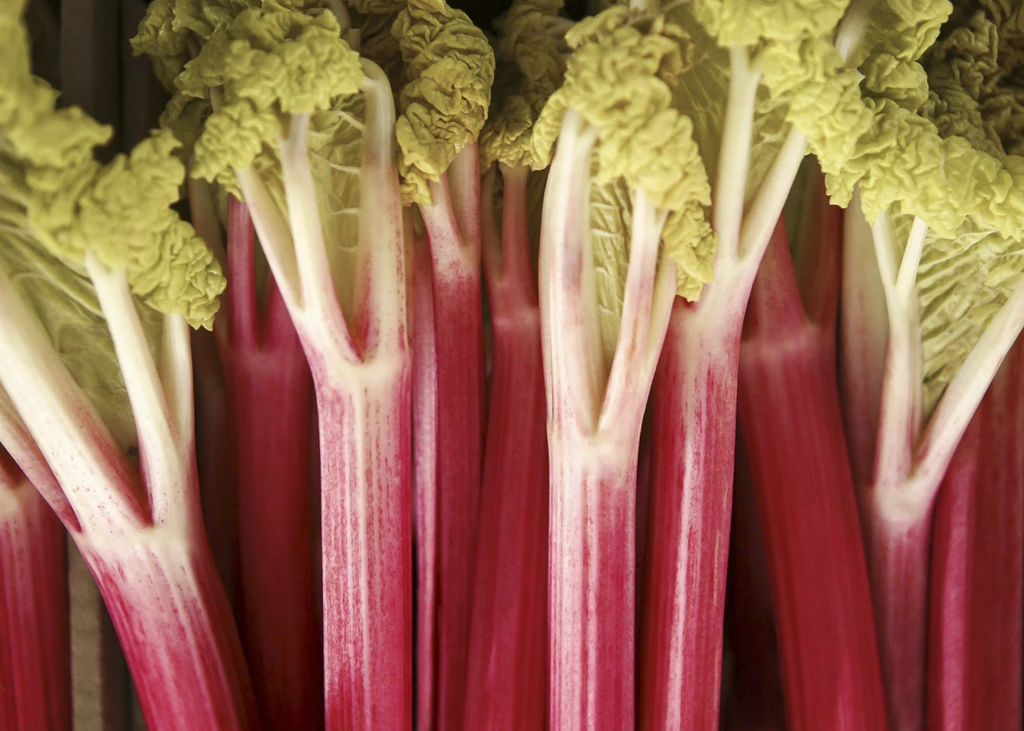
It was already known in Roman times by the name Rheum Rhabarbarum or “foreigner from the Rhine.”
In the United Kingdom, “forced rhubarb” grows in a specific area known as the “Rhubarb Triangle,” which includes Wakefield, Leeds, and Morley in Yorkshire. In this area, the soil is rich in nitrogen, which, combined with the cool, damp climate, provides rhubarb with the ideal conditions to thrive. Production at this time of year became a necessity, as a wide variety of fruit was not available. Their unique technique of growing forced rhubarb underground and harvesting it by candlelight—similar to the cultivation of continental white asparagus to produce a more delicate and sweeter plant—has been in use since its inception in 1877. After two years spent outdoors, the plant is moved to a shed or cellar, where the rhubarb grows in total darkness. Rhubarb grows faster this way than plants cultivated traditionally, “forcing” its way upward in search of the light needed to produce glucose via chlorophyll—a process that is impossible in the dark.
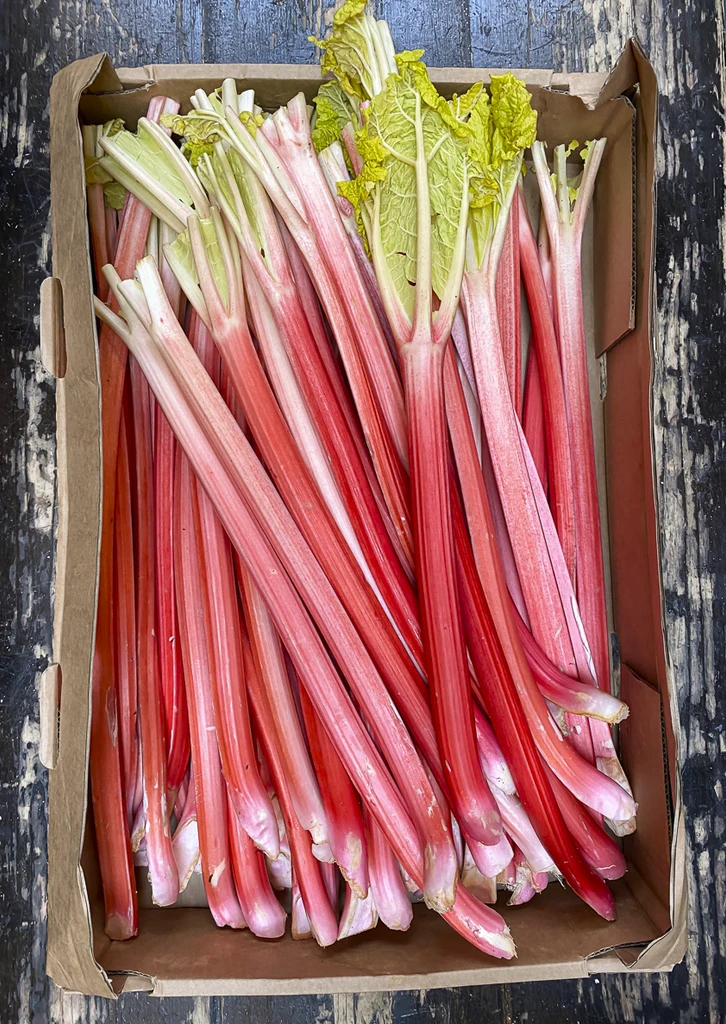
In this way, the plant uses the energy stored in its root in the form of carbohydrates. By drawing on the root’s glucose reserves for growth, the result is a tender stalk and a flavor that is much sweeter and less tart than that of rhubarb grown outdoors. The shed is also heated—originally with the abundant “surplus” coal from the local mining industry—to maintain an optimal temperature for growth, and the soil is traditionally treated with “shoddy,” a byproduct of wool (from Yorkshire’s other traditional industry, sheep farming). The high level of nitrogen, which is released during decomposition, acts as a natural fertilizer. Another labor-intensive yet romantic and poetic aspect of forced rhubarb is the harvest. Since rhubarb must be kept out of the light, farmers rely solely on a candle to illuminate the shed or cellar, and the entire harvest is done entirely by hand. Once harvested, the rhubarb is placed directly into crates to avoid further exposure to light.
“Rhubarb is a very versatile ingredient in the kitchen, with its tart and fruity notes that pair well with both sweet and savory foods.”
I’ve discovered that rhubarb is a very versatile ingredient in the kitchen, with its tart and fruity notes that pair well with both sweet and savory dishes. It’s perfect for making chutney, which can be stored in jars and enjoyed later in the year—perhaps in the spring—paired with fresh goat’s milk or fresh cheeses. Another way to preserve it is to make pure rhubarb jam or perhaps mix it with strawberries. With its tartness, forced rhubarb pairs well with fatty meats like pork or duck, and when made into a compote, it’s a wonderful pairing with a grilled mackerel fillet. At La Fromagerie, I use forced rhubarb preserved in brine and serve it with a specialty from my region: burrata. I love this unusual pairing, with the tangy rhubarb beautifully cutting through the rich creaminess of the burrata. But there are many other pairings through which this overlooked vegetable can make a grand return to our tables.
Pickled Rhubarb and Burrata
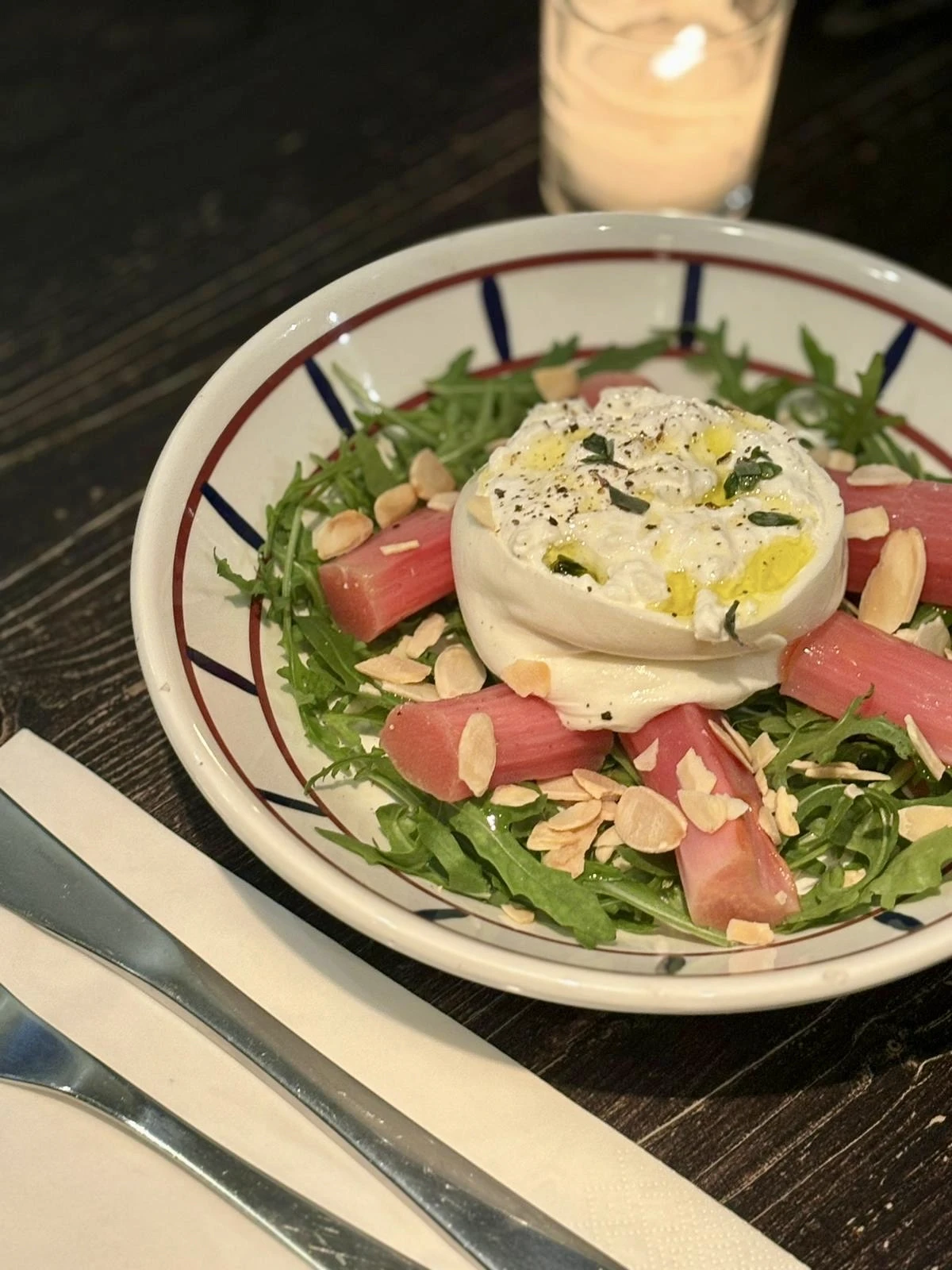
2 stalks of forced rhubarb
150 ml of cider vinegar
80 ml of water
100 g of golden granulated sugar
1 clove
1 bay leaf
5 peppercorns
1 burrata
To finish:
1 tablespoon toasted almonds
A good extra virgin olive oil, preferably from Puglia.
Trim the rhubarb, cut it into sticks about 10 cm long, and place it in a deep, heat-safe bowl.
Pour the vinegar and water into a saucepan, add the remaining ingredients, and bring to a boil.
Gently pour the liquid over the rhubarb, making sure it’s completely covered by the marinade. Cover with plastic wrap and let cool to room temperature.
Once ready, it can be eaten right away, or—as I prefer—place it in a container and let it sit in the refrigerator for 3 days.
Then remove the stalks from the marinade, pat them dry lightly to remove excess liquid, and arrange them on a plate.
Cut the burrata into pieces, arrange them around the almond, and finish with a generous drizzle of olive oil, salt, and pepper.